Back to Real Estate Definitions Fact-checked by a REMAX Thailand Real Estate Expert
Legal Document, Preliminary Agreement
What is Memorandum of Understanding in Thailand?
The Definition
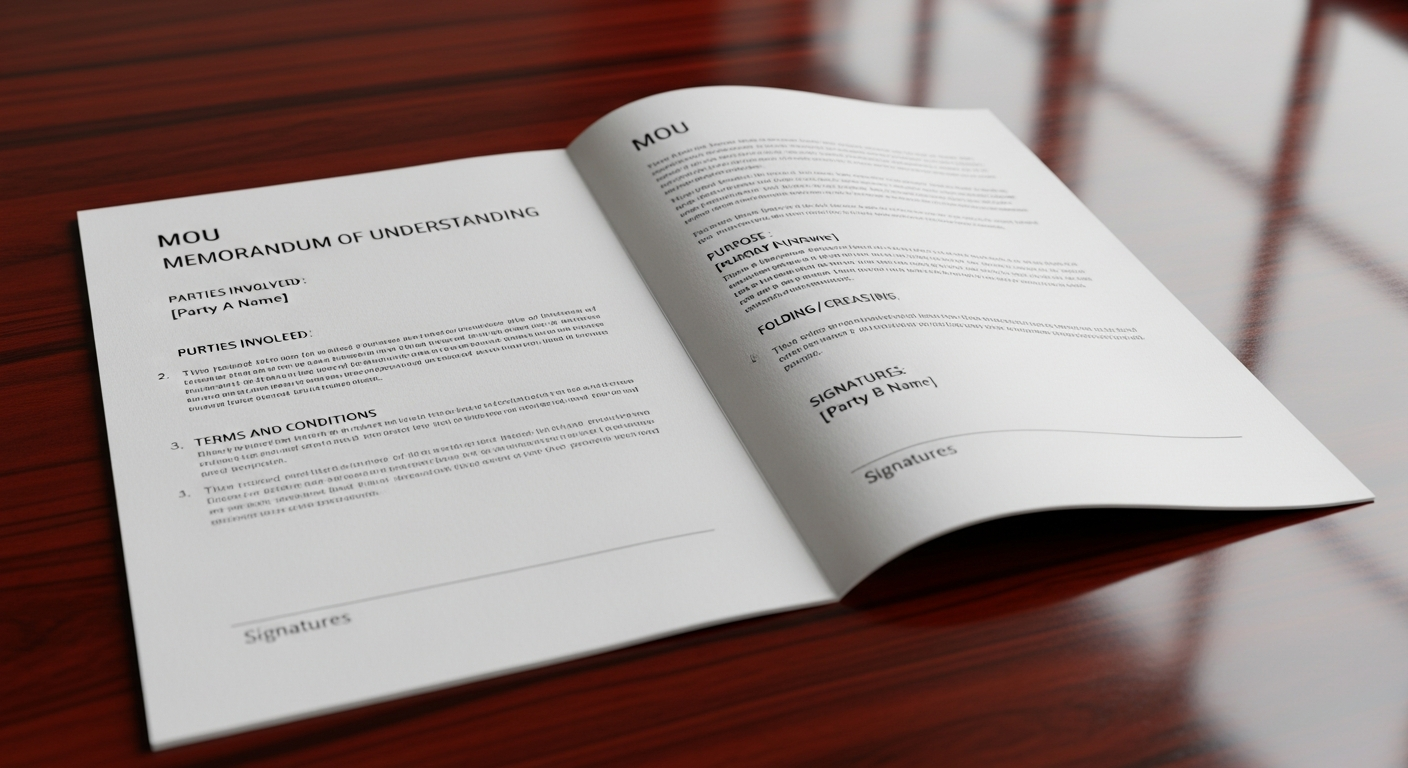
A Memorandum of Understanding (MOU) is a formal written document that outlines the terms, objectives, and commitments of an agreement between a buyer and seller in a property transaction. In Thailand, it serves as a preliminary framework that clarifies the intentions of both parties before a formal purchase contract is executed. While legally recognized, an MOU is typically non-binding and does not create enforceable obligations in the same way a formal contract does.
Global Expectations vs. Thai Reality
In Western real estate markets, a memorandum is often treated as a non-binding summary circulated after an offer acceptance. In Thailand, however, the MOU functions more as an intentional preliminary step with stronger cultural and professional expectations for commitment. Thai practitioners and brokers view the MOU as a serious marker of intent, and backing out carries significant reputational consequences in the local market, which foreign buyers often underestimate.
The Problem It Presents
Many buyers mistakenly believe that signing an MOU is a casual step with minimal financial or professional consequences. If a buyer or seller withdraws after an MOU is signed, they often face sunk costs—such as inspection fees, attorney fees for title searches, and appraisal costs—that are absorbed out of pocket during the due diligence phase. Additionally, backing out can damage a professional reputation in Thailand's real estate community.
Foreigner vs. Thai Citizen Rules
An MOU applies equally to both foreign nationals and Thai citizens in terms of basic enforceability. However, foreign buyers should be aware that Thailand has restrictions on foreign ownership of land; an MOU does not circumvent these restrictions. A foreigner must ensure the MOU explicitly acknowledges foreign ownership restrictions and alternative structures (such as long-term leasehold arrangements) before progressing, whereas a Thai citizen may proceed more seamlessly.
The Thai Legal Context
MOUs in Thailand are recognized legal documents governed by Thailand's general contract law framework. The Department of Lands and Revenue Department oversee property transactions once they progress to formal contracts, but MOUs operate in the preliminary phase. The Office of the Attorney General and local legal practices guide MOU standards, though customization is common and advisable through local legal counsel familiar with Thailand's business practices.
Benefits & Risks
Advantages
- Clarifies intentions early by laying out price, payment terms, and contingencies upfront.
- Protects confidentiality regarding sensitive transaction details and negotiated terms.
- Offers flexibility to walk away or renegotiate if due diligence reveals issues without legal enforcement action.
Risks & Disadvantages
- Creates a false sense of security; only a formal purchase contract provides legal enforceability.
- Sunk costs (inspection, attorney fees) are non-recoverable if either party withdraws.
- Withdrawing signals a lack of seriousness, potentially damaging future negotiating power.
Showcase: How It Works
Let’s look at a real-world scenario to understand how Memorandum of Understanding is applied during a property transaction.
The Scenario
- A foreign buyer negotiates a Bangkok condo for ฿8.5M, agreeing to a 10% deposit and 60-day closing.
- The MOU includes contingencies for a building inspection (14 days) and foreign ownership verification.
- The buyer pays ฿40,000 for a title search and inspection, which reveals significant structural issues.
The Result
The buyer decides to withdraw due to the inspection results. Because the contingencies were explicitly agreed upon in the MOU, he avoids legal liability and reputational damage, though he loses the sunk costs of the inspection.
Outcome: Loss: ฿40,000 (Sunk Costs) / Deposit Saved
Memorandum of Understanding vs. Sales Purchase Agreement (SPA)
A quick breakdown of how this term compares to its closest alternative.
| Feature | Memorandum of Understanding | Sales Purchase Agreement (SPA) |
|---|---|---|
| Legal Binding Force | Generally non-binding unless specific clauses included. | Legally binding and fully enforceable in Thai courts. |
| Purpose & Scope | Preliminary framework outlining basic intentions. | Formal contract defining all obligations and breach consequences. |
| Enforceability | No court enforcement; relies on reputation. | Fully enforceable; breach results in legal action. |
Frequently Asked Questions
Is an MOU legally binding in Thailand?
No, generally it is non-binding unless it includes specific enforceable clauses. Only a fully executed SPA is legally binding in Thai courts.
What happens to my deposit if I withdraw?
It depends on the MOU language. If stated as "held in escrow" and refundable based on contingencies, you recover it. If "non-refundable," you likely lose it.
How long is an MOU valid?
Typically 30–90 days from signature, often with 14–21 day periods for inspections and financing verification.
Are there specific MOU rules for foreigners?
Yes. The MOU should acknowledge foreign ownership restrictions and specify the structure (e.g., leasehold or freehold condo) to ensure compliance.
Can I modify an MOU after signing?
Yes, it can be modified by mutual written agreement before the formal contract is signed.
Related Terms
Why It Matters
An MOU is your first official step in a Thai property transaction—it signals serious intent to both the market and your counterparty, locks in key negotiation terms, and protects you with contingency clauses during due diligence. If you misunderstand or dismiss the MOU as a casual formality, you risk losing substantial sunk costs and professional credibility.
💡 REMAX Pro Tip
Always include explicit, detailed contingency clauses in your MOU—specifically around financing, foreign ownership verification, property inspection, and title clearance—and ensure the MOU explicitly states that any deposit is held in escrow and refundable if your contingencies are not satisfied. Never sign an MOU without having a Thai-qualified attorney review it.
Common Misconceptions
Myth: An MOU is legally binding and can be enforced in court if one party walks away.
Reality: An MOU is generally non-binding unless it explicitly includes enforceable clauses. Courts typically will not force performance on an MOU alone; only a fully executed SPA creates enforceable legal obligations.
Myth: Once I sign an MOU, the seller cannot change the price or terms.
Reality: Because an MOU is preliminary and non-binding, either party can propose modifications by mutual agreement before a formal purchase contract is signed; the MOU is a roadmap, not a locked-in commitment.
Need more help?
Our expert agents and AI are ready to assist you.
Ask Line AI Ask WhatsApp AI Find an Agent