Back to Real Estate Definitions
⏱️ Estimated Reading Time: 6 mins
Legal Interest, Property Rights
What is Future interest in Thailand?
Fact-checked by a REMAX Thailand Real Estate Expert
The Definition
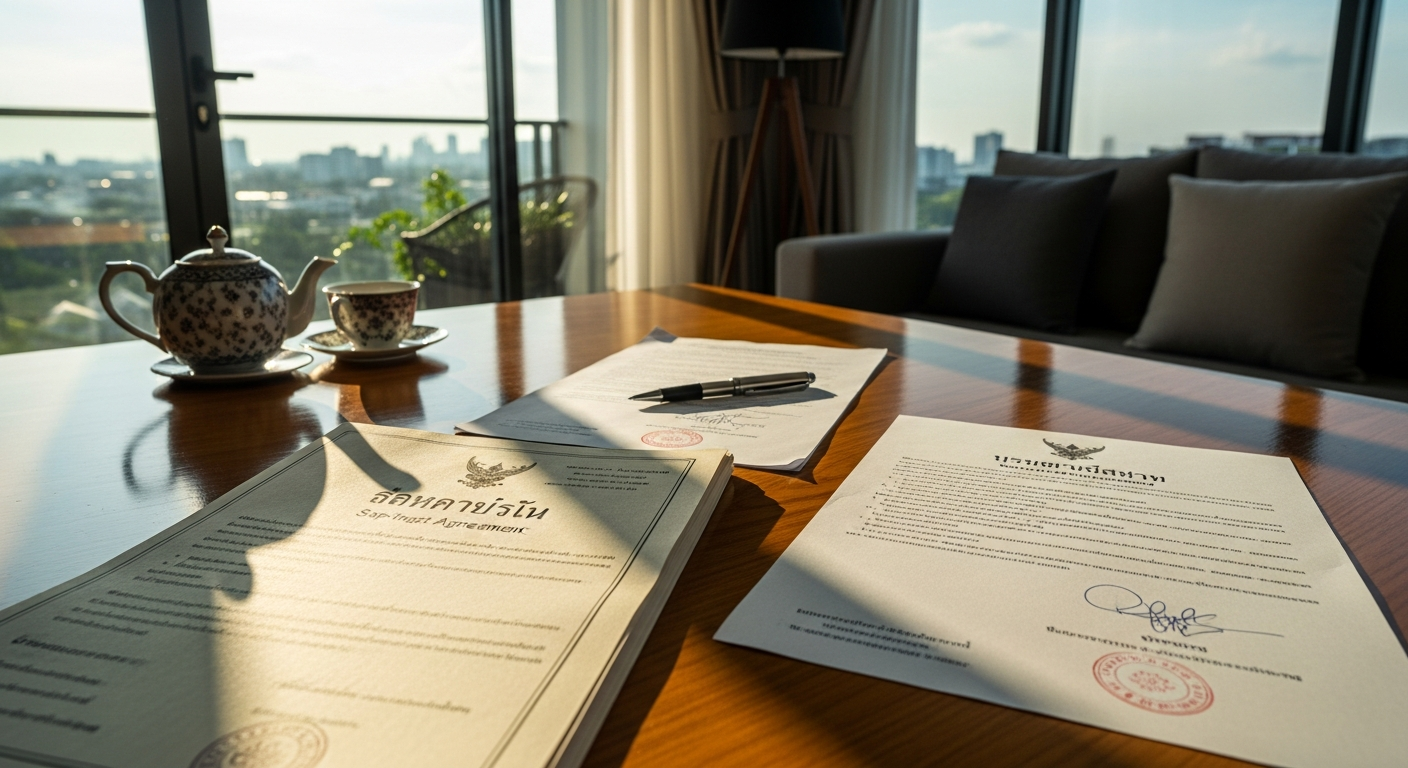
A future interest is a present legal right to own or control real property that will not result in actual possession or enjoyment until sometime in the future. In Thailand's context, this typically applies to situations where a person has a documented claim to property that vests at a later date, such as through inheritance, lease succession, or conditional property arrangements. Future interests are particularly relevant for foreigners in Thailand, where direct land ownership is restricted and alternative mechanisms like usufruct or sap-ing-sith provide future control rights.
Global Expectations vs. Thai Reality
Western property law systems recognize future interests as standard instruments that can be bought, sold, and willed with relative ease. In Thailand, however, the concept operates within significantly more restrictive frameworks due to constitutional prohibitions on foreign land ownership. A foreigner expecting to purchase a future interest in Thai land—as they might in the United States or Europe—will find that Thai law channels such rights through specific mechanisms (usufruct, sap-ing-sith, or 30-year leaseholds) rather than traditional future interest structures. Additionally, many future interests in Thailand cannot be freely transferred without government approval or specific registration, unlike their Western counterparts.
The Problem It Presents
Many foreign buyers assume they can purchase a future interest in Thai property and later convert it to ownership, only to discover that Thai law does not recognize such arrangements for non-nationals—leading to loss of investment or entanglement in disputes with Thai family members or authorities. If a foreigner enters into an informal agreement to receive property in the future without proper legal documentation (such as a registered usufruct or sap-ing-sith), they have no enforceable claim under Thai law and risk losing both the property and their financial contribution. Additionally, failing to understand that future interests in usufruct or sap-ing-sith are not freely transferable can trap investors in illiquid positions, as these rights typically end upon death and cannot be sold to a third party without special registration and Thai approval.
Foreigner vs. Thai Citizen Rules
Thai nationals can hold traditional future interests (remainders, reversions, executory interests) in land, whereas foreign nationals are largely prohibited from owning land directly and therefore cannot hold future interests in the same legal sense. Instead, foreigners must structure their long-term property rights through usufruct agreements (which grant lifetime usage rights) or sap-ing-sith arrangements (which provide up to 30-year control rights with potential transferability if registered). This fundamental distinction means that while a Thai citizen might inherit land through a future interest mechanism, a foreigner must rely on alternative legal constructs specifically designed to circumvent the foreign ownership ban.
The Thai Legal Context
Future interests in Thailand are governed by the Thai Civil and Commercial Code (CCC), specifically provisions related to property rights and succession. The Department of Lands (Krom Thidin) administers property registration and enforces restrictions on foreign ownership under the Land Title Act B.E. 2497 (1954), which prohibits non-Thai nationals from owning land directly. The Revenue Department manages transfer taxes and stamp duties when future interests change hands. For foreigners, alternative structures like usufruct (a right to use and derive income from property for life or 30 years) and sap-ing-sith (a registrable real right lasting up to 30 years) are the primary legal mechanisms creating future property interests.
Benefits & Risks
Advantages
- Legal Security with Reduced Complexity: Structuring property rights through usufruct or sap-ing-sith avoids the complications of trying to circumvent foreign ownership laws, providing a registered, legally enforceable claim recognized by Thai courts and the Department of Lands.
- Income Generation: Usufruct and sap-ing-sith holders can legally rent out the property and derive income, making these future interest structures attractive for investor expatriates seeking passive returns.
- Lifetime Protection: A lifetime usufruct grants exclusive enjoyment of property for the duration of the holder's natural life, providing long-term residential security without the burden of ownership.
Risks & Disadvantages
- Non-Transferability & Limited Exit: Most future interests in Thailand (particularly usufruct) cannot be sold or transferred to another person; upon death, the right typically reverts to the property owner, eliminating resale value.
- No True Ownership & Wealth Building: Unlike freehold ownership, future interests do not build equity or allow you to pass the property to heirs; the investment is fundamentally temporary and personal to the holder.
- Regulatory Uncertainty & Political Risk: Changes to Thai property laws or shifts in enforcement of foreign restrictions could suddenly alter the enforceability or terms of future interest arrangements, particularly for sap-ing-sith, which is newer and less established.
Showcase: How It Works
Let’s look at a real-world scenario to understand how Future interest is applied during a property transaction.
The Scenario
- Property Value: 5,500,000 THB; Usufruct Duration: Lifetime (Richard's natural life in Thailand).
- Registration Fee & Stamp Duty: ~50,000–100,000 THB + 27,500 THB; Annual Maintenance: ~15,000–25,000 THB.
- Monthly Rental Income (if sublet): 25,000 THB (Gross 300,000 THB annually).
The Result
Richard secures a high-quality residential investment with legal protection, generates passive income, and has exclusive possession—all without owning the land. However, upon his death (or if he leaves Thailand permanently), the usufruct automatically terminates and the property reverts to Somchai. Richard's heirs cannot inherit or sell the usufruct; his investment is wholly consumed during his lifetime. This structure provides security and income but no wealth transfer or exit liquidity.
Outcome:Net ~275,000 THB annually with zero equity building.
Future interest vs. Leasehold Estate
A quick breakdown of how this term compares to its closest alternative.
| Feature | Future interest | Leasehold Estate |
|---|---|---|
| Duration & Renewability | Usufruct: lifetime or 30 years (non-renewable); Sap-ing-sith: up to 30 years | Typically 30 years with option to renew; succession clauses allow contract to pass to heirs |
| Transferability & Inheritance | Generally non-transferable to third parties; reverts to owner upon death or departure | Can be bought, sold, and inherited if contract includes succession clause |
| Legal Recognition & Enforceability | Registered with Department of Lands; courts enforce; widely accepted for foreigners | Registered in lease contract; enforceable but weaker than usufruct due to limited duration |
Frequently Asked Questions
Can I, as a foreigner, inherit land in Thailand as a future interest?
No. Thai law prohibits foreigners from owning land, including through inheritance. If a Thai family member leaves you land in a will, you cannot inherit it; instead, Thai authorities will force a sale, and the proceeds go to your Thai heirs or the Thai state.
Is a usufruct the same as a lease, and can I sell it?
No. A usufruct is a personal, non-transferable right to use and benefit from property for life or a fixed period; you cannot sell it to another person. A lease, by contrast, can sometimes be assigned or transferred if the lease agreement permits.
What happens to my usufruct or sap-ing-sith when I leave Thailand or pass away?
Both rights terminate automatically upon your death or permanent departure from Thailand. The property reverts to the original owner; your heirs have no claim to the property or the usufruct.
How much does it cost to set up a usufruct or sap-ing-sith agreement?
Registration fees vary by province and property value but typically range from 50,000–150,000 THB, plus stamp duty (approximately 0.5% of the property value) and legal fees (2,000–10,000 THB for a lawyer). Annual maintenance and property taxes apply as normal.
Can the Thai property owner cancel my usufruct or sap-ing-sith before my death?
No, once registered, a usufruct or sap-ing-sith cannot be unilaterally cancelled by the owner during the agreed term. However, both the owner and you can mutually agree to terminate it. Changes to Thai law could theoretically affect these rights, though such changes are rare.
Related Terms
REMAX Thailand Editorial Team
Fact-checked by local real estate professionals to ensure accuracy, transparency, and trustworthiness for foreign and domestic investors.
Why It Matters
Understanding future interests—particularly usufruct and sap-ing-sith—is critical for foreign buyers because choosing the wrong structure can mean losing your entire investment upon death or departure, with no inheritance or resale option. Conversely, selecting the correct legal mechanism protects your money, enables income generation, and ensures Thai courts will defend your rights.
💡 REMAX Pro Tip
Always insist on registered documentation at the Department of Lands for any future interest arrangement—whether usufruct or sap-ing-sith. An unregistered verbal agreement or private contract is worthless under Thai law and will not hold up in court if disputes arise. A 1% registration fee is cheap insurance compared to losing your entire property investment.
Common Misconceptions
Myth: I can buy a future interest in Thai land now and own it outright once my lease expires or conditions are met.
Reality: Thai law prohibits this path for foreigners. A future interest does not convert into ownership; instead, the right expires or reverts to the original owner. Foreigners cannot own land under any future interest structure, only lease it or hold usufruct/sap-ing-sith rights.
Myth: A sap-ing-sith is the same as ownership and gives me all the rights of an owner.
Reality: Sap-ing-sith grants control and income rights for up to 30 years but does not convey true ownership. While it is registrable and more flexible than usufruct (potentially transferable if registered), it remains a limited real right that expires or reverts, leaving you without the asset.
Need more help?
Our expert agents and AI are ready to assist you.
Ask Line AI Ask WhatsApp AIFind an Agent