Why Investing in Thailand's Agriculture & Agribusiness Sector is Critical for 2026
Thailand's agribusiness sector is undergoing a state-sponsored technological revolution, creating an urgent and lucrative window for strategic investors. With the organic fertilizer market projected to hit US$158.86 million by 2033 (representing a robust 9.83% CAGR) and the government injecting over US$52.5 billion into agri-tech via its "Agriculture 4.0" initiative, the fundamentals for explosive growth are locked in.
This blueprint outlines the data-driven case for investment and the critical legal hurdles that require expert navigation. For sophisticated international investors, corporate agribusiness entities, and private equity firms, the question is no longer if they should invest, but how to structure that investment to navigate complex foreign ownership laws and maximize returns in a market pivoting rapidly toward high-tech sustainability.
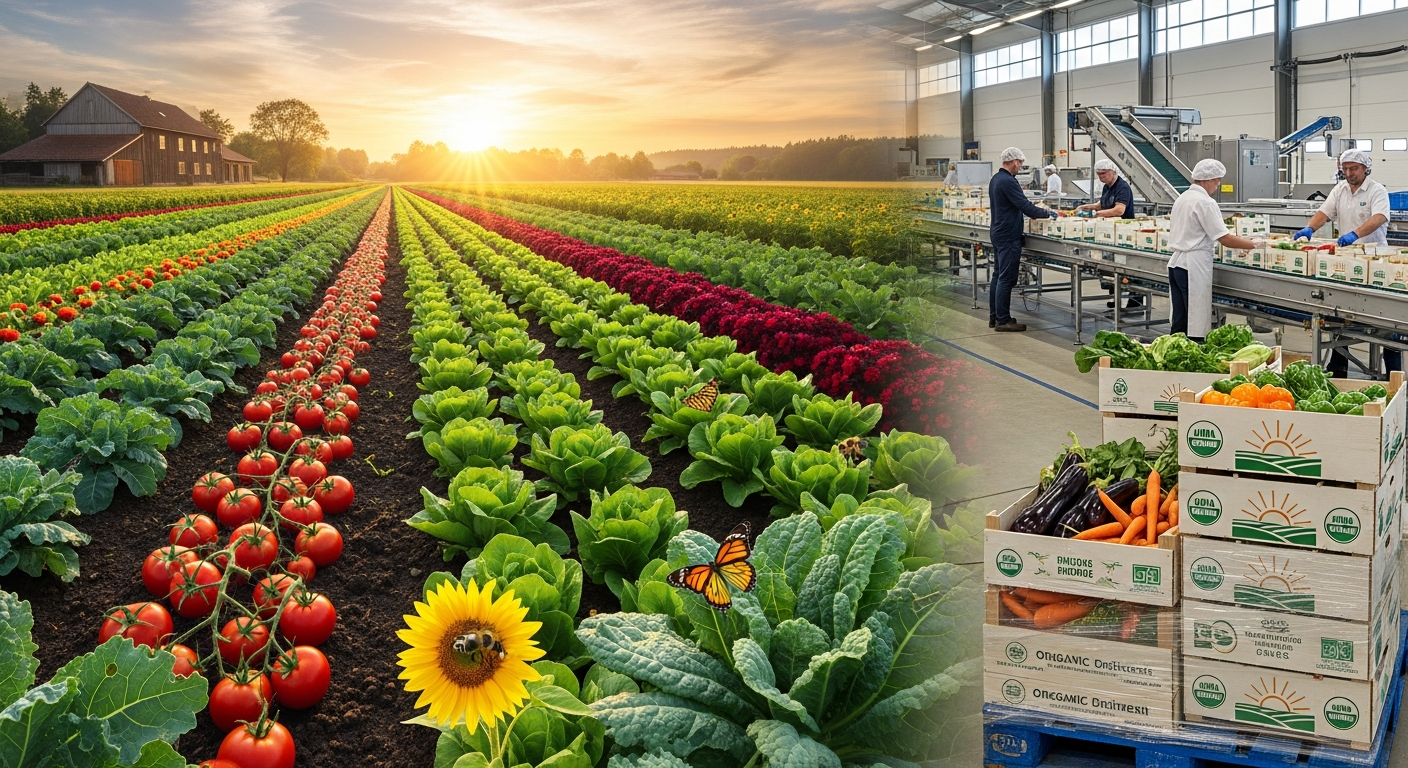
Thailand's organic sector is pivoting toward high-value exports and smart farming technology.
What is Driving Thailand's Agribusiness Boom in 2026?
The boom is driven by a powerful convergence of aggressive government policy, rising global consumer demand for organic products, and rapid technological modernization.
Thailand is not merely relying on its traditional strength as a "kitchen of the world." The government has recognized that to maintain dominance, it must modernize. The Agriculture 4.0 initiative, launched strategically in late 2025 with a full operational rollout scheduled for January 15, 2026, serves as the engine for this transformation. This initiative represents a massive capital injection aimed at transforming traditional farming into smart, data-driven agribusiness.
The economic metrics supporting this shift are undeniable. While the broader fertilizer market is growing at a respectable 6.4% CAGR, the organic fertilizer market is outpacing it significantly with a 9.83% CAGR projected through 2033. This disparity highlights a structural shift in the industry: farmers and corporations are moving away from chemical dependency toward sustainable, high-value organic inputs. This shift is further evidenced by the agricultural GDP reaching an all-time high of US$5.56 billion in Q1 2025, demonstrating immediate sector momentum.
"The National Innovation Agency (NIA) has invested over US$52.5 billion in agri-tech through the AGROWTH platform, supporting 81 agricultural startups leveraging AI, robotics, and biotechnology."
Furthermore, rising health consciousness in both domestic and export markets is directly fueling demand. Thai consumers are increasingly preferring organic products, and international markets—particularly neighboring countries—are demanding higher safety standards. This demand pressure is forcing a supply-side revolution, creating a lucrative gap for investors who can fund the infrastructure (smart greenhouses, processing facilities, organic plantations) required to meet this need.
How Can Foreigners Invest in Thai Agricultural Properties?
Foreigners can invest in Thai agricultural properties primarily through structured long-term leases and Board of Investment (BOI) promoted projects, as direct land ownership is heavily restricted. Success requires expert legal and real estate consultation to navigate the regulatory framework.
Navigating the Board of Investment (BOI) Framework
The most secure avenue for large-scale corporate investment is often through the Thailand Board of Investment (BOI). The BOI offers specific incentives for agribusiness enterprises that bring technology or high-value processing to the country. Under specific BOI promotions, foreign-majority companies may be granted permission to own land for the duration of their business operations. This is a critical exception to the general rule prohibiting foreign land ownership. However, these applications are complex, requiring detailed business plans that demonstrate technology transfer (e.g., Agriculture 4.0 compliance) and economic benefit to Thailand.
Understanding Land Lease and Ownership Laws
For investors not qualifying for BOI promotion, the primary mechanism for control is the long-term leasehold. Investors must understand the critical distinction between "leasing" and "owning." While foreigners generally cannot hold freehold title to agricultural land, they can register 30-year leases at the Land Department. It is vital to note that the Thai Land Department has strict rules specifically for agricultural zoning. Misunderstanding these zoning laws—such as attempting to build a luxury villa on land designated strictly for agriculture without proper permits—is the #1 area where investors fail. Proper due diligence ensures that the lease allows for the intended agricultural use and infrastructure development.
The Role of Technology in ROI
In 2026, land acquisition is only half the equation. The real ROI is driven by operational efficiency. Integrating precision farming tools—such as drones for aerial fertilization, soil sensors for real-time nutrient monitoring, and data analytics—is no longer optional; it is essential. These technologies, supported by the government's "Agriculture 4.0" subsidies, allow investors to maximize yield per rai while minimizing expensive inputs like organic fertilizers. Investors should view the property not just as land, but as a platform for deploying this technology to capture higher margins.
Which Regions Offer the Best Agricultural Investment Potential?
Thailand's prime agricultural investment zones are concentrated in traditional crop-specialized provinces like Nakhon Sawan and Udon Thani for commodities, while emerging high-value opportunities in aquaculture and specialty crops are developing along strategic export corridors.
When selecting a location, investors must align geography with crop specialization:
- Nakhon Sawan & Udon Thani: These are the heartlands for Sugarcane and Ethanol production. Thailand remains the 2nd largest sugarcane exporter globally, and these provinces offer established infrastructure for processing and transport.
- Kanchanaburi: Another key zone for sugarcane and bio-energy crops, offering proximity to western borders.
- Central Plains: The hub for Corn and Animal Feed, driven by high global demand from China and the EU.
However, the highest margin growth lies in the "Emerging Opportunities" highlighted by the Agriculture 4.0 plan. Strategic investors are looking beyond commodities to:
- Alternative Proteins: Provinces with strong logistics are seeing a rise in high-tech cricket farming (Jingkrong), a sector rapidly gaining global traction as a sustainable protein source.
- Organic Aquaculture: Coastal areas are developing facilities for high-value organic white crabs and rare marine species, targeting premium export markets.
- Premium Fruit: Areas with specific microclimates are being developed for high-yield, export-grade Durian plantations, which command immense prices in the Chinese market.
Are Common Concerns About Thai Agribusiness Valid?
No. Common concerns about the market being low-tech or low-growth are outdated. Data shows the organic sector is growing nearly 10% annually, and massive government investment is rapidly modernizing the entire industry, creating a competitive advantage.
Myth: "Organic farming is a niche, low-growth market."
Fact: The organic fertilizer market alone is growing at 9.83% annually, significantly outpacing the conventional fertilizer market's 6.4% growth. This is not a niche trend; it is a structural shift driven by health-conscious consumers and strict government regulations on chemical contaminants.
Myth: "The sector is low-tech and resistant to change."
Fact: The perception of the Thai farmer using only a water buffalo is decades old. Today, the AGROWTH platform supports over 81 agri-startups utilizing AI and robotics. International partnerships, such as those with XAG Thailand and FarmInno, are deploying advanced drone swarms for pollination and fertilization. The sector is actively leapfrogging into the digital age.
Myth: "Exports are not profitable due to regional competition."
Fact: While basic commodities face price pressure, Thailand has successfully pivoted to high-value specialization. By focusing on specialty fertilizers, micronutrient-enriched crops, and premium organic produce, Thailand avoids the "race to the bottom" on price. The country's superior logistics infrastructure compared to many neighbors ensures that fresh, high-quality produce reaches export markets faster, commanding a premium.
Frequently Asked Questions
Q: Can a foreigner buy a farm in Thailand?
A: Direct ownership of agricultural land by foreigners is generally restricted in Thailand. The primary legal avenues for investment are through long-term leases or by establishing a Thai company under a Board of Investment (BOI) promotion, which may grant land ownership privileges under strict conditions. Professional legal guidance is essential.
Q: What is Thailand's Agriculture 4.0 initiative?
A: Agriculture 4.0 is a major Thai government initiative launched in 2025 to transform the nation's farming sector into a high-tech, high-value industry. It involves significant investment in precision farming, biotechnology, automation, and data analytics to increase yields, reduce waste, and boost competitiveness.
Q: What is the potential ROI on organic farming in Thailand?
A: While specific ROI benchmarks vary by crop and operation, the sector's fundamentals are strong. The organic fertilizer market is growing at 9.83% annually, outpacing the conventional market. Government subsidies and rising consumer demand for premium organic products create a favorable environment for high returns, especially when paired with modern technology to optimize yields.
Q: Which crops are most profitable for export from Thailand?
A: Traditionally, Thailand is a global leader in exporting sugarcane and corn. However, the most profitable emerging opportunities are in high-value, specialized products such as premium-grade durian, organic aquaculture (rare marine species), and alternative proteins like edible insects, all of which are supported by government initiatives.
The REMAX Pro Tip
The single greatest risk for any foreign investor in Thai agriculture is improper land acquisition. Many online agents offer misleading advice on structuring ownership. A legally sound transaction MUST be vetted through the Thai Land Department and, if applicable, the Board of Investment. Our process includes a mandatory legal due diligence check with a licensed Thai law firm specializing in agricultural property before any funds are transferred, protecting your investment from start to finish.