Thailand F&B Real Estate: Seizing Opportunities in a Market Driven by Wellness and Premiumization
While global economic headwinds present challenges across many sectors, Thailand's Food & Beverage (F&B) industry remains a vibrant and resilient engine of the national economy. However, for investors and entrepreneurs, the landscape has fundamentally shifted. Success is no longer solely defined by securing a location with high foot traffic; it is now determined by how well a property aligns with powerful, evolving consumer shifts towards holistic wellness, premiumization, and sensory-driven experiences.
Current market data suggests a complex but promising picture. While domestic sales volume is projected to grow modestly at 2.3–3.3% annually through 2028, specific niches are exploding with activity. Ready-to-eat food exports, for example, expanded by 9.8% in volume in 2024, signaling strong international confidence in Thai culinary production. For the commercial real estate investor, this dichotomy presents a clear signal: generic properties may struggle, but specialized real estate that caters to health-conscious dining, artisanal production, and high-end "experience" venues is in higher demand than ever. Navigating this market requires a sophisticated understanding of how zoning, infrastructure, and consumer psychology intersect.
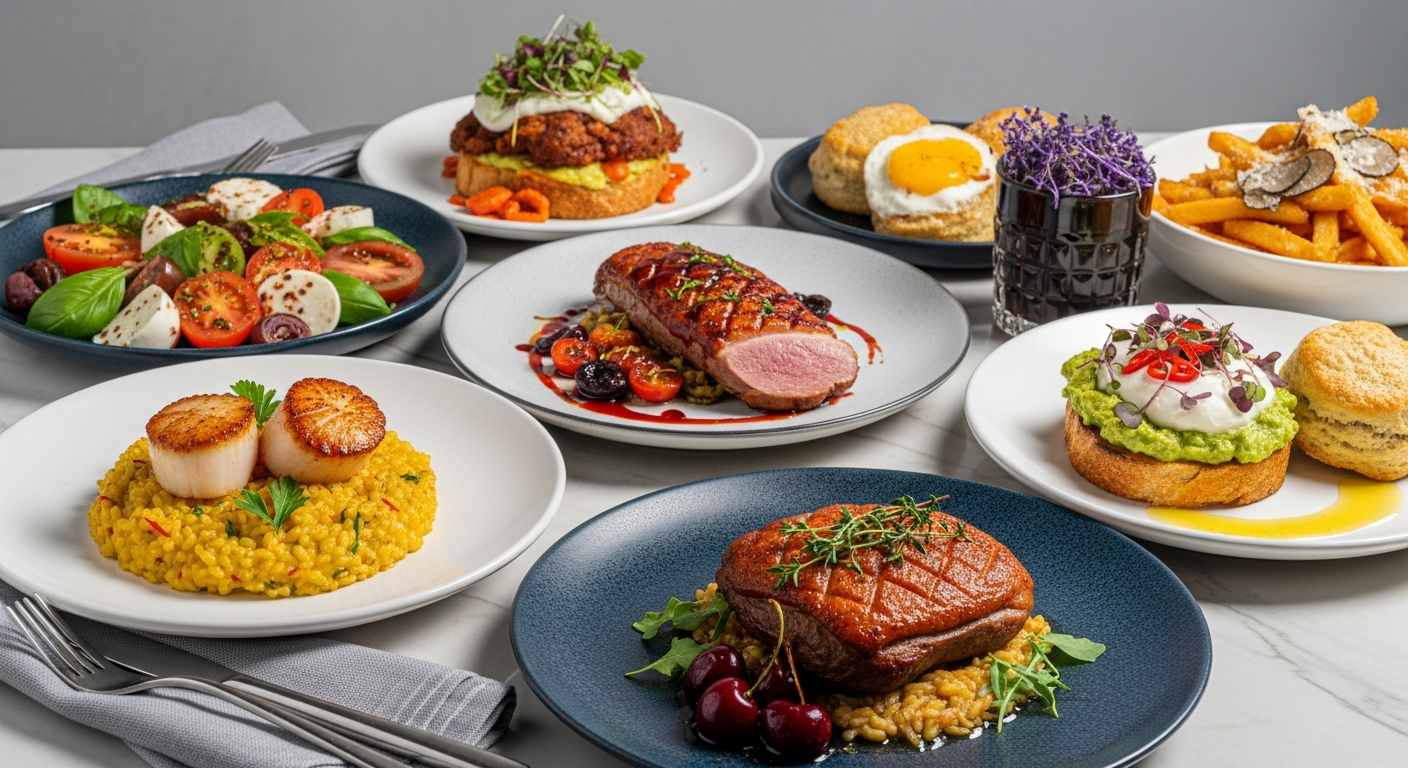
Thailand's vibrant culinary scene drives demand for specialized commercial real estate.
Why is Thailand's F&B Sector a Prime Target for Real Estate Investment?
Thailand's F&B sector is a prime investment target because evolving consumer demands are creating new, profitable niches for specialized properties. Market growth is fueled by trends in health-conscious dining, demand for premium products, and the desire for unique experiences, making strategically chosen real estate more valuable than ever.
The overarching narrative of Thailand's commercial real estate market for F&B is one of segmentation. We are moving away from the era where any shophouse on a busy street guaranteed success. Today, the physical attributes of a property must facilitate the specific operational needs of emerging trends. The properties that appreciate most in value are those that can accommodate the infrastructure required for high-concept dining and production.
The Holistic Wellness Wave
One of the most significant drivers of real estate demand is the "Holistic Wellness" trend. As confirmed by market analysis, Thai consumers are increasingly favoring health-conscious, plant-based, and organic options. This shift has direct implications for real estate selection. Wellness-focused cafes, organic juice bars, and farm-to-table restaurants require properties that exude health and purity.
Investors should look for commercial spaces in proximity to high-end fitness centers, yoga studios, and luxury residential condominiums—areas where the target demographic already lives and exercises. Furthermore, the physical space itself matters; properties with outdoor terraces, abundance of natural light, and advanced ventilation systems (crucial for maintaining fresh air quality) command a premium. A gloomy, enclosed unit is antithetical to the wellness brand image, whereas a bright, airy space with potential for a "green wall" or garden access becomes a highly leasable asset.
Premiumization as a Market Driver
"Premiumization" is reshaping the F&B landscape. Despite economic fluctuations, there is a resilient segment of consumers willing to pay significantly more for high-quality, artisanal, and unique F&B offerings. This trend drives demand for properties that can support high-spec operations. For example, a premium bakery or artisanal coffee roaster requires commercial spaces with heavy-duty electrical capacity (3-phase power) and industrial-grade plumbing to support sophisticated machinery.
Real estate in prime high-street locations—such as Thonglor, Ekkamai, or Sathorn—remains the gold standard for these businesses. The visibility and prestige of the address are part of the "premium" product consumers are buying. Consequently, landlords or investors holding properties in these zones can demand higher rents from operators who need the address to validate their brand's luxury positioning.
The Experience Economy
Finally, the shift from simple dining to "sensory-driven experiences" justifies investment in unique architectural properties. The modern diner wants more than just food; they want an atmosphere. This has led to a surge in value for properties with unique character—converted warehouses, colonial-style houses, or units with rooftop access. A standard concrete box is less desirable than a space with high ceilings, exposed brick, or a courtyard. Investing in properties that offer these "instagrammable" features provides a competitive edge, as F&B operators are desperate for spaces that naturally market themselves on social media.
Key Property Types and Their Strategic Value in the Thai F&B Market
The most strategic F&B property types in Thailand are restaurants, cafes, and nightlife venues, each serving a distinct, high-growth consumer segment. The value of each property type is determined by its alignment with current market trends, from wellness-focused cafes to experience-driven bars.
Restaurants: From Fine Dining to Fast Casual
The real estate needs for restaurants vary drastically depending on the business model. For Fast Casual concepts, the primary value driver is foot traffic and turnover speed. These businesses thrive in smaller footprints (50-100 sqm) located in high-density office hubs or near mass transit (BTS/MRT) stations. The layout must allow for a streamlined kitchen and rapid customer flow.
Conversely, Fine Dining establishments require destination properties. They are less dependent on random foot traffic and more focused on exclusivity and ambiance. Standalone houses with parking, or secluded units in high-end lifestyle malls, are ideal. The real estate value here is often tied to the ability to control the entire environment—sound, lighting, and entry experience—which is difficult to achieve in a crowded food court or busy street-side shophouse.
Cafes & Bakeries: The New Community Hubs
Cafes in Thailand have evolved into "third places"—essential community hubs that serve as workspaces, social meeting points, and relaxation zones. This evolution has changed the criteria for cafe real estate. It is no longer enough to have a small corner for an espresso machine. Successful cafe properties now require larger floor plans to accommodate "co-working" style seating.
"The most crucial feature for a modern cafe property is infrastructure adaptability: high ceilings for air circulation, abundant natural light for ambiance, and robust electrical systems for customers' laptops and devices."
Investors should target properties in residential neighborhoods (like Ari or On Nut) that offer a "neighborhood feel." Corner units with dual-aspect windows are particularly valuable as they offer better light and visibility, acting as a beacon for the local community.
Bars & Nightlife Venues: Capitalizing on Experiential Demand
The nightlife sector is driven purely by the "Experience Economy." Real estate for bars and clubs is highly specialized due to the strict legal requirements regarding noise and zoning. The most valuable assets in this category are those that already possess, or are eligible for, entertainment licenses.
Rooftops remain the crown jewel of nightlife real estate in Bangkok, offering views that justify premium pricing. However, ground-level venues with courtyards or "speakeasy" potential (hidden entrances, basements) are also seeing a resurgence. The critical factor for investors here is soundproofing capability—properties with thick concrete structures or those detached from residential neighbors reduce the risk of noise complaints, which is the number one cause of business closure in this sector.
Navigating the Critical Legal & Licensing Landscape for F&B Properties
Successfully securing an F&B property in Thailand requires expert navigation of complex legal and licensing frameworks, including food safety certifications, liquor licenses, and business registrations. Failure to address these early in the property search process leads to significant delays and financial loss.
The most common mistake foreign investors make is signing a lease before verifying if the property can legally support their intended business. For instance, alcohol sales are prohibited within a certain radius of schools and religious institutions. A beautiful property located 200 meters from a university may be legally barred from obtaining a liquor license, rendering it useless for a cocktail bar concept.
Due diligence is paramount. This involves checking the building's official usage designation at the land department. Some residential condos strictly forbid commercial food preparation on the ground floor due to gas line restrictions. Additionally, signage tax and local building codes regarding fire exits and grease traps must be considered before purchase or lease.
REMAX Thailand acts as an essential partner in this phase. We do not just find you a "space"; we connect clients with legal experts to conduct thorough due diligence on zoning laws and property history. We ensure that the property you fall in love with is actually viable for your business model, protecting your capital from regulatory pitfalls.
REMAX Pro Tip: When evaluating a shophouse for an F&B conversion in Thailand, pay close attention to the building's electrical capacity and ventilation infrastructure. Many older properties require significant, costly upgrades to support commercial-grade kitchen equipment and air conditioning. Verifying this during due diligence can save you from unforeseen expenses that cripple your budget before you even open.
Frequently Asked Questions (FAQ)
Q1: What are the biggest consumer trends driving F&B property demand in Thailand?
The primary trends are a focus on holistic wellness and health-conscious food, the "premiumization" of dining with a willingness to pay for higher quality, and the demand for unique, sensory-driven dining experiences over simple meals.
Q2: Is it better to lease or buy commercial property for a restaurant in Thailand?
This depends on capital and long-term strategy. Leasing offers lower initial costs and greater flexibility, making it ideal for new concepts. Buying provides long-term stability and an asset, but requires significant capital and a deep understanding of the local market.
Q3: What are the main legal hurdles for opening a bar or restaurant in Thailand?
The primary hurdles include securing the correct business licenses, food and hygiene certifications, and the highly specific liquor licenses, which can be restricted by location (e.g., near schools or places of worship).
Q4: Which property feature is most crucial for a modern cafe in Bangkok?
Beyond a prime location, the most crucial feature is the property's ambiance and infrastructure—specifically, good natural light, reliable high-speed internet capability, and an adaptable layout that can serve as both a social space and a remote work hub.