Back to Commercial Properties 
Hotel for sale legal requirements to operate in Thailand
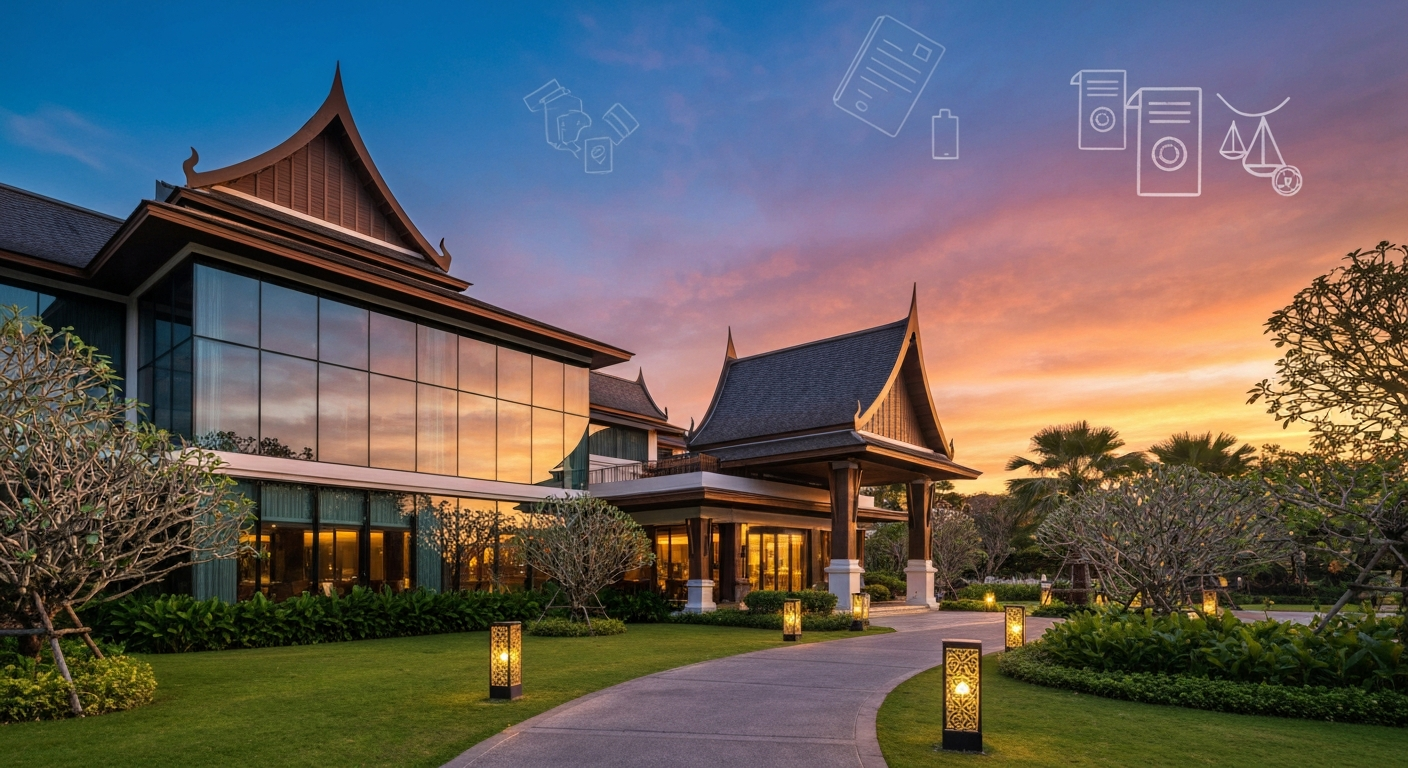
Navigating the legal landscape of Thailand's hospitality sector requires strict compliance with the Hotel Act B.E. 2522 (1979) and the Tourism Business Act. Whether acquiring a boutique resort in Phuket or a high-rise hotel in Bangkok, foreign and domestic investors must secure specific operational licenses, safety certifications, and specialized permits. This comprehensive guide outlines the exact legal frameworks, structural prerequisites, and operational licensing fees (starting around 20,000 THB) necessary to legally purchase and operate a commercial hospitality property in Thailand.
TL;DR - Quick Summary
- Establishments with 4 or more rooms and 20 or more beds require a formal Hotel Business License under the Hotel Act B.E. 2522, issued by the Department of Provincial Administration (DOPA).
- Operations must comply with the Tourism Business Act by registering with the Tourism Authority of Thailand (TAT) and securing clearance from the Tourist Police.
- Beyond the core hotel license (starting at 20,000 THB), investors must secure supplementary permits for food service, liquor distribution, fire safety, and entertainment.
Navigating The Hotel Act B.E. 2522 (1979) & Core Licensing
The foundational law governing hospitality operations in the Kingdom is the Hotel Act B.E. 2522 (1979). Under Thai legal definitions, any establishment offering temporary sleeping accommodations to four or more guests, and possessing a total capacity of 20 or more beds, is strictly classified as a hotel and must be registered accordingly. The application process mandates submission to the Department of Provincial Administration (DOPA) for properties located within Bangkok, or the local Provincial Governor’s Office for regional investments in tourist hubs like Chiang Mai, Phuket, or Koh Samui. Bypassing these regulations or misclassifying a property under the Condominium Act to avoid hotel taxes can result in severe financial penalties and forced closure.
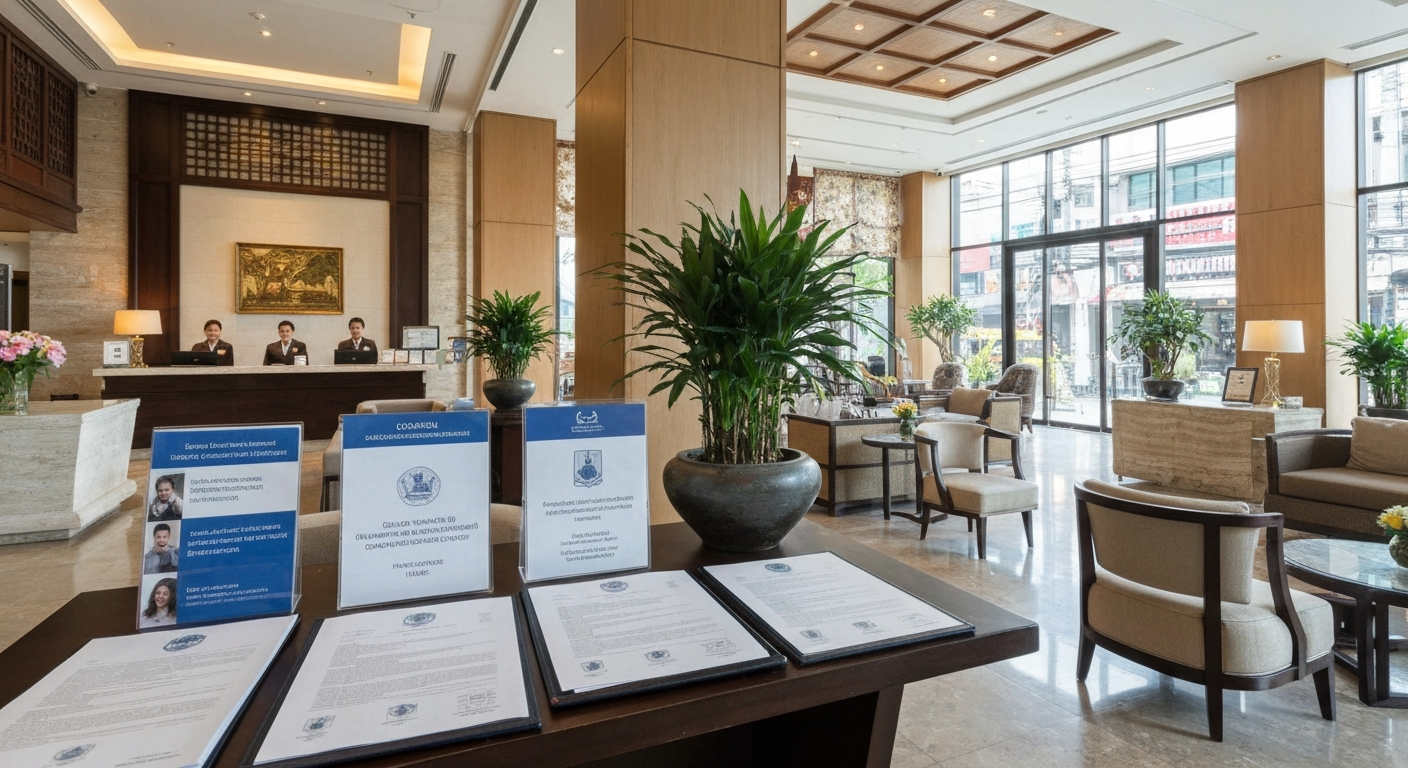
A standard hotel operational license is valid for one year and carries an initial government fee starting around 20,000 THB, depending on the scale and star classification of the property. Before this license is even granted, investors must ensure structural and environmental compliance. This includes obtaining a valid construction permit for any physical modifications, alongside a mandatory fire safety certificate issued by the Department of Fire and Rescue Services. Due to zoning complexities, consulting with a qualified commercial real estate agent and legal counsel is essential before acquiring any hotel asset.
💡 REMAX Pro Tip
Before finalizing any hotel acquisition, conduct a rigorous due diligence check on the property's existing building use permit (Or. 6). Many older guesthouses operate in zones not legally cleared for commercial hotel operations under local zoning laws. Rectifying zoning violations post-purchase is incredibly costly and often impossible without completely rebuilding.
Written by REMAX Thailand Experts
Verified Real Estate Authority
This guide is researched and authored by our certified local market experts at REMAX Thailand. With decades of combined experience across the Kingdom, our team ensures every insight is backed by verified transaction data, strict legal compliance, and up-to-date market trends.
Need Personalized Advice?
Our expert agents and REX AI are ready to assist you with tailored real estate solutions.