Back to Real Estate Definitions
Immigration Notification
What is TM30 in Thailand?
Fact-checked by a REMAX Thailand Real Estate Expert
The Definition
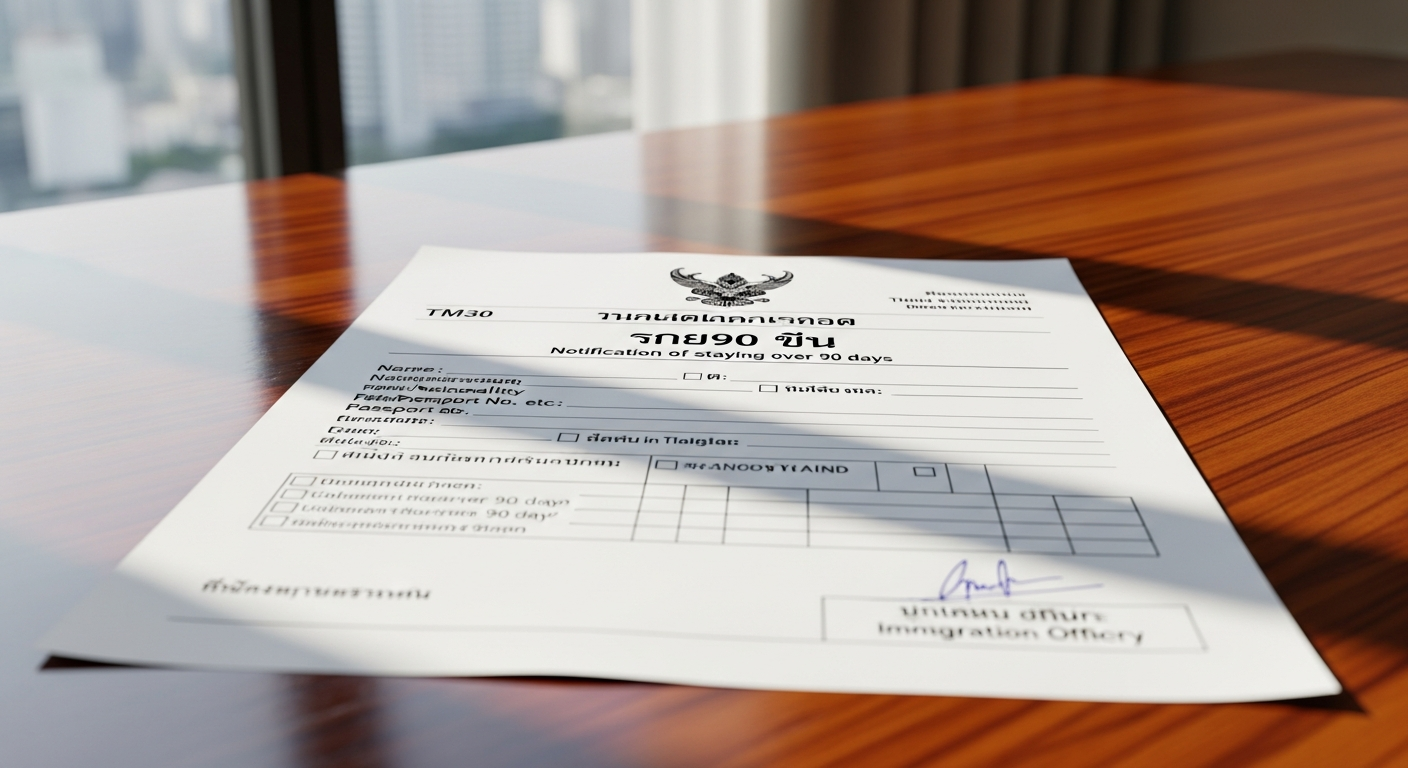
TM30 is a mandatory immigration notification form in Thailand requiring property owners, landlords, or managers to report the residence of any foreign national staying at their premises within 24 hours of arrival. It applies to all non-hotel accommodations and must be refiled for address changes or new arrivals. Foreigners need proof of TM30 submission for visa extensions, 90-day reporting, or immigration checks.
The Thai Legal Context
Governed by Section 38 of the 1979 Immigration Act, TM30 extends beyond hotels to all residences hosting foreigners. Unlike Western countries where tenants update their own addresses, in Thailand, the legal burden falls strictly on the property owner or manager. TM30 applies exclusively to foreign nationals (non-Thais). Property owners must report every foreign resident, regardless of visa type, via local immigration offices, online portals, or the Section 38 app, using documents like passport copies, title deeds, Tabien Baan, and rental agreements. Enforcement is strict in expat hubs, where missing records can halt deals or trigger fines.
Benefits & Risks
Advantages
- Ensures legal residency tracking, smoothing visa renewals and 90-day reports with proof of address.
- Protects property owners from liability in audits, maintaining rental income stability.
- Online and app filing options make it quick for compliant landlords, reducing paperwork.
Risks & Disadvantages
- Strict 24-hour deadline creates urgency, needing repeated filings for address changes or trips.
- Landlord ignorance or reluctance shifts hassle to foreigners, risking fines or visa issues.
- No automatic reminders; often overlooked in rentals, leading to cumulative penalties.
Showcase: How It Works
Let’s look at a real-world scenario to understand how TM30 is applied during a property transaction.
The Scenario
- A British expat buys a condo in Pattaya and moves in on March 5.
- The Thai co-owner or agent files the TM30 online within 24 hours via the Immigration portal.
- Copies of the passport, title deed (Chanote), and purchase agreement are submitted.
The Result
The TM30 is approved instantly online. The expat uses the receipt for his visa extension.
Outcome:Avoids 1,600 THB fine and visa delays.
TM30 vs. 90-Day Reporting
A quick breakdown of how this term compares to its closest alternative.
| Feature | TM30 | 90-Day Reporting |
|---|---|---|
| Responsibility | Property owner, landlord, or manager | The foreigner themselves |
| Frequency & Timing | Within 24 hours of arrival or change | Every 90 days of continuous stay |
| Purpose & Penalties | Tracks residences for owner liability (fines 800-2,000 THB) | Confirms ongoing stay (overstay fines up to 500 THB/day) |
Frequently Asked Questions
Who is legally responsible for filing TM30?
The property owner, landlord, or manager must file it. Foreigners can only assist or file via proxy with authorization.
Does TM30 apply to condo hotels or short-term stays?
Yes, unless the property has an official hotel license, TM30 applies to all non-hotel foreigner stays, regardless of duration.
What if I change addresses or return from a trip abroad?
A new TM30 must be filed within 24 hours each time by the new owner or manager upon your arrival.
Related Terms
Why It Matters
Ignoring TM30 risks immediate fines, visa blocks, and immigration blacklisting, derailing property ownership or rentals in Thailand's expat markets. Buyers and renters must verify it upfront to safeguard long-term residency.
💡 REMAX Pro Tip
Always demand a TM30 receipt copy from your landlord or agent on move-in day. Store it digitally and refile personally via the Section 38 app if you're a foreign owner to ensure compliance.
Need more help?
Our expert agents and AI are ready to assist you.
Ask Line AI Ask WhatsApp AIFind an Agent