Back to Real Estate Definitions
Building Permit / Legal Document
What is Building Inspection Certificate (R.1) in Thailand?
Fact-checked by a REMAX Thailand Real Estate Expert
The Definition
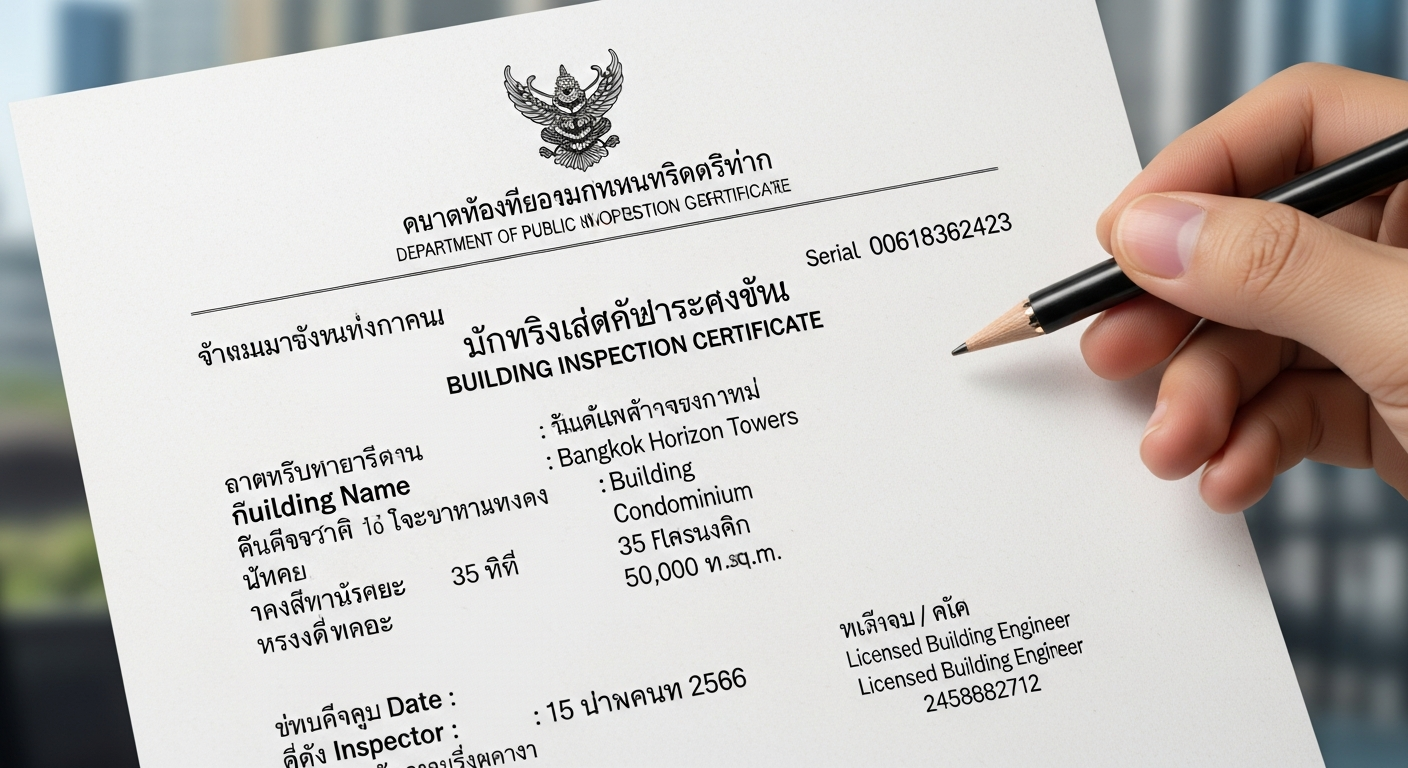
In Thailand, Building Inspection Certificate (R.1) is the official document issued by the local building authority confirming that a building has been inspected and found compliant with the approved building plans and relevant safety/structural requirements. In practice, it is commonly treated as evidence that the building has passed the final inspection stage and is ready for lawful use or occupancy, which is especially important in condo, commercial, and new-build transactions.
The Thai Legal Context
In Thailand, building control is governed primarily by the Building Control Act B.E. 2522 (1979) and related ministerial regulations, with enforcement handled through local building authorities under local administrative bodies and the relevant municipal or Bangkok offices, depending on location. For real estate buyers, the practical issue is not just whether a structure exists, but whether it was built and inspected in compliance with the approved permit system; that compliance is what the R.1 certificate helps evidence. Thai property law also distinguishes between land title rights and building approval/safety compliance, so a building can have a land title trail under the Department of Lands while still lacking the proper final inspection record for the structure itself. For foreign buyers, this concept often differs from what they may expect in Western markets because Thailand’s due diligence often centers on title deed validity, building permit history, and final inspection documents rather than a single all-encompassing “certificate of occupancy” model. A foreign buyer can own a condominium unit under the Condominium Act if quota and remittance rules are satisfied, but that does not eliminate the need to confirm that the project building itself was properly permitted and inspected. The friction points are usually practical: missing R.1 paperwork in older projects, unclear handover status in new developments, and unexpected costs or delays if the building cannot be shown as legally completed and fit for use.
Benefits & Risks
Advantages
- Helps confirm the building was inspected and accepted by the local authority, reducing legal and usability risk.
- Supports smoother transfers, financing, and resale because buyers and banks can verify that the building was properly completed.
Risks & Disadvantages
- If the certificate is missing or delayed, the property may face handover, utility, or resale complications, especially in newer projects.
- Buyers may assume a building is “done” when legally it is not fully cleared, creating hidden compliance risk.
Showcase: How It Works
Let’s look at a real-world scenario to understand how Building Inspection Certificate (R.1) is applied during a property transaction.
The Scenario
- A foreign buyer agrees to purchase a THB 8,500,000 condominium unit in Bangkok from a developer.
- The lawyer finds the building has completed construction, but the developer lacks the final building inspection certificate (R.1).
- The buyer decides to delay transfer for 45 days until the developer secures the certificate.
The Result
By waiting, the buyer avoids accepting a unit that could later be disputed as not fully approved for use, and the bank releases mortgage funds only after the certificate is shown.
Outcome:0 transfer completed until R.1 is verified
Frequently Asked Questions
Is the R.1 the same as a title deed?
No. The R.1 relates to building inspection/compliance, while the title deed confirms rights in the land or unit under the Department of Lands system.
Do foreigners need the R.1 even if they buy a condo?
Yes. Foreign ownership rules do not remove the need to verify that the building itself was properly approved and inspected.
What happens if a building has no R.1?
The property may still exist physically, but the buyer can face legal, financing, or handover problems because the structure may not be fully certified as compliant.
Related Terms
Free Guide
Download "Transfer Completion Guide" to learn more and navigate safely.
Get the FREE PDF GuideWhy It Matters
A missing or unclear R.1 can turn a “finished” property into a legal and financing problem, even when the building looks complete on the ground. For buyers and sellers, this is a small document that can have a big impact on transfer timing, compliance risk, and future resale value.
💡 REMAX Pro Tip
Always ask for the permit file, final inspection evidence, and handover pack before paying a reservation or transfer deposit—especially in new projects and villa developments. If the seller cannot produce the R.1 quickly, have your lawyer verify whether the issue is administrative or a true compliance defect.
Need more help?
Our expert agents and AI are ready to assist you.
Ask Line AI Ask WhatsApp AIFind an Agent