Legal Document
What is Building Permit Tor Bor 1 in Thailand?
Fact-checked by a REMAX Thailand Real Estate Expert
The Definition
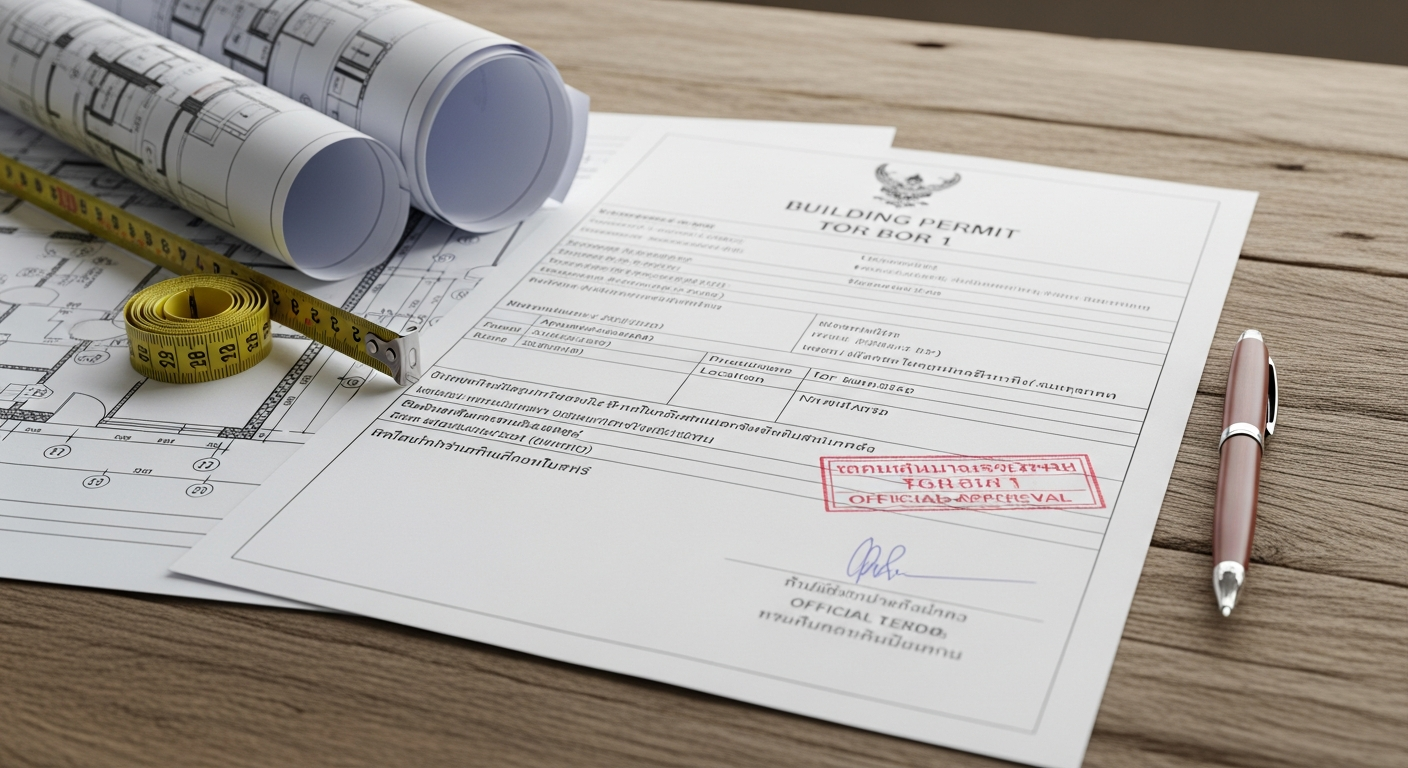
In Thailand, Building Permit Tor Bor 1 refers to the official government-issued construction permit used to authorize the building of a structure, typically issued under Thailand’s building control framework by the local authority or competent municipality. In practical property transactions, it is one of the key documents buyers, lenders, and lawyers check to confirm that a house or building was lawfully approved for construction and matches the approved plans. For Thai property buyers, this permit matters because it helps verify that the structure is not an illegal build and reduces the risk of future enforcement, demolition orders, or financing problems.
The Thai Legal Context
Thailand’s building-permit process is governed by the country’s building control laws and local administrative authorities, with permits typically handled through the relevant municipality or local government office rather than the Land Department. While the provided sources do not quote the permit form name in full, they do confirm that a buyer’s legal due diligence should include reviewing building permits alongside title deeds, zoning, and planning compliance before purchase. In the Thai market, this is especially important because a property can have a valid title deed yet still have an improperly approved or non-compliant structure, which is a very different risk profile from many Western markets where buyers often assume title and building legality are bundled more closely together.
The Thailand-specific issue is that foreign buyers are often focused on ownership form—condo freehold, leasehold, superficies, or company structures—while overlooking the legality of the improvement itself on the land. Foreigners generally cannot own land in Thailand, though they can own condos within the foreign quota and may own buildings or structures in certain legal arrangements; however, the building still must be properly permitted and compliant with Thai regulations. Common friction points include discovering that the house was extended without approval, the permit does not match the as-built floor area, the land use or setback rules were violated, or the buyer must spend additional money on legalization, redesign, or retroactive approvals before a bank will finance the property or before a future resale can proceed smoothly.
Benefits & Risks
Advantages
- Helps confirm the structure was lawfully approved before construction, reducing legal uncertainty.
- Supports smoother resale, refinancing, and due diligence because lawyers and banks can verify the building’s status.
Risks & Disadvantages
- If the permit is missing or inconsistent with the actual building, the buyer may face legal and repair costs after closing.
- Unauthorized additions or alterations can create enforcement risk and weaken the property’s marketability.
Showcase: How It Works
Let’s look at a real-world scenario to understand how Building Permit Tor Bor 1 is applied during a property transaction.
The Scenario
- A Thai family sells a detached pool villa in Phuket for THB 18,500,000.
- The buyer’s lawyer discovers that the villa’s main house was originally approved with a ground floor plus one upper floor, but the seller later enclosed the terrace and added a storage wing, increasing the usable floor area by 28 sq.m. without updating the permit.
- The municipality requires an application to regularize the changes, including revised drawings, engineer certification, and administrative fees totaling THB 145,000, and the process takes 90–120 days.
The Result
Because the buyer plans to finance THB 12,000,000 through a Thai bank, the bank conditions approval on proof that the building permit and as-built layout match. The seller agrees to reduce the sale price by THB 145,000 and complete legalization before transfer, or otherwise the buyer can walk away under the contract terms.
Outcome:THB 145,000 cost & 3–4 month delay
Frequently Asked Questions
Is a Building Permit Tor Bor 1 the same as a title deed?
No. The title deed proves rights to the land, while the building permit proves the structure was approved for construction; both should be checked separately in Thailand.
Do foreigners need to worry about a building permit if they buy a condo?
Yes, but differently. For condos, the project’s building approvals and developer compliance matter more than individual house-style permits, and foreign buyers should still verify the legal status of the building and unit.
What happens if the house has no building permit?
The buyer may face legalization costs, delays, and potential enforcement issues, and the property may be harder to mortgage or resell.
Related Terms
Why It Matters
A Building Permit Tor Bor 1 matters because it helps prove the house is legally built, not just legally sold. If a buyer skips it, they can inherit hidden compliance problems that affect financing, resale value, and even the right to use the structure as intended.
💡 REMAX Pro Tip
Always make the building permit, approved plan set, and actual site measurements line up before paying a deposit—if the seller cannot produce matching documents, treat that as a negotiation issue, not a minor paperwork delay.
Need more help?
Our expert agents and AI are ready to assist you.
Ask Line AI Ask WhatsApp AIFind an Agent