Back to Real Estate Definitions
Planning / Land Use
What is Green Zone (Zoning) in Thailand?
Fact-checked by a REMAX Thailand Real Estate Expert
The Definition
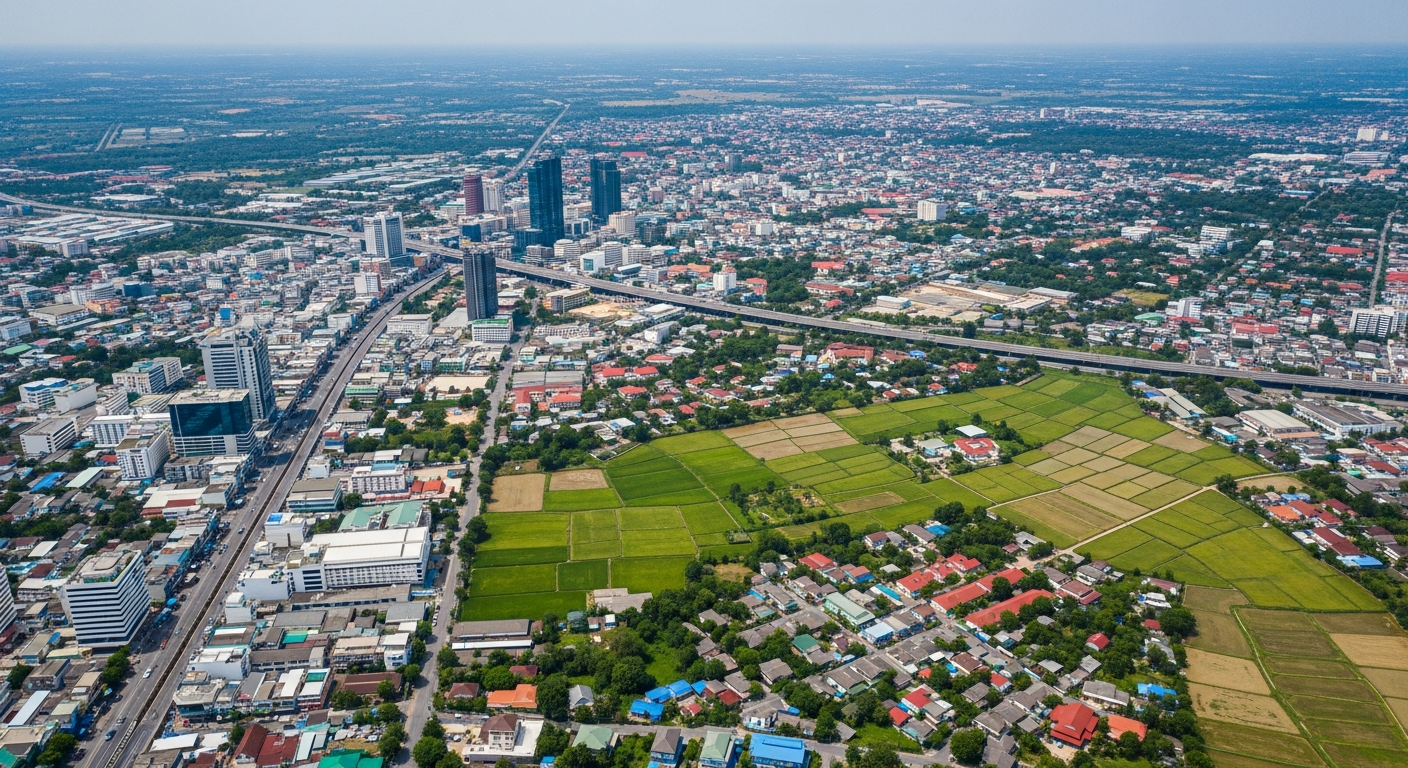
In Thailand, Green Zone usually refers to land designated under the government’s zoning plan as a protected or low-density area, typically intended to preserve agriculture, open space, or environmental value rather than intensive urban development. It is not a title deed type; it is a land-use restriction that affects what can be built, how dense development may be, and whether a project is realistically approvable.
The Thai Legal Context
Thailand’s zoning framework is governed primarily through city planning and local land-use regulations administered by the Department of Public Works and Town & Country Planning (DPT), alongside local ordinances and building-control rules. The critical issue is whether a parcel sits in a designated green or low-intensity zone, as this limits building size, use category, setback, and subdivision potential. These restrictions operate alongside the Land Code and Building Control Act. For foreign buyers, the practical difference is crucial. While foreigners generally cannot own land directly (often relying on leaseholds, Thai companies, or Thai spouses), zoning misreads can create major friction. In Thailand, a seemingly cheap plot may be cheap precisely because it cannot legally support an intended villa, resort, or commercial project. Common pain points include discovering too late that the land cannot support the planned building footprint, drainage or environmental constraints apply, or extra time and professional fees are needed to confirm permissible use before signing.
Benefits & Risks
Advantages
- Lower entry price: Green-zoned land is often cheaper than fully urban or development-heavy land.
- Environmental or lifestyle value: Suits buyers seeking privacy, views, agriculture, or low-density living.
Risks & Disadvantages
- Building limits: Development may be restricted or require special approvals, reducing usable project size.
- Permit uncertainty: A project that looks feasible on paper may fail Land Office or building-permit review.
Showcase: How It Works
Let’s look at a real-world scenario to understand how Green Zone (Zoning) is applied during a property transaction.
The Scenario
- A foreign buyer wants to develop 3 luxury villas (900 sq.m. footprint) on a 2,400 sq.m. plot in Phuket offered at THB 18,000,000.
- The parcel falls in a green zone under the local land-use plan, restricting development to low-intensity use.
- Due to stricter setbacks and open-space requirements, only two villas can be approved at the planned size.
The Result
The buyer must either proceed with a reduced project, negotiate the price down, or abandon the purchase after spending on due diligence.
Outcome:Allowed: 2 villas / Reduced build area
Frequently Asked Questions
Can I build a villa on green-zoned land in Thailand?
Sometimes, but not always at the size or density you expect. The answer depends on the specific local land-use plan, setbacks, access, utility availability, and whether the proposed use fits the permitted category.
Is green zoning the same as a protected national park or forest reserve?
No. Green zoning is a planning designation, while forest reserve or protected-status land is a separate legal issue with much stricter ownership and development limits.
Does green zoning affect foreigners more than Thais?
The zoning rules apply to the land, not nationality, but foreigners feel the impact more because they frequently buy through structures like leaseholds or develop villas and resorts.
Related Terms
Why It Matters
Green zoning can turn an apparently attractive parcel into a legally limited asset, and in Thailand the difference between “can buy” and “can actually build” can be enormous. If you do not verify zoning early, you can lose bargaining power, time, and substantial due diligence costs.
💡 REMAX Pro Tip
Always verify title deed + zoning + building permit feasibility before paying a reservation deposit; in Thailand, the cheapest land is often the land with the most hidden restrictions.
Need more help?
Our expert agents and AI are ready to assist you.
Ask Line AI Ask WhatsApp AIFind an Agent