Back to Real Estate Definitions
PLANNING/ZONING TERM
What is Open Space Ratio (OSR) in Thailand?
Fact-checked by a REMAX Thailand Real Estate Expert
The Definition
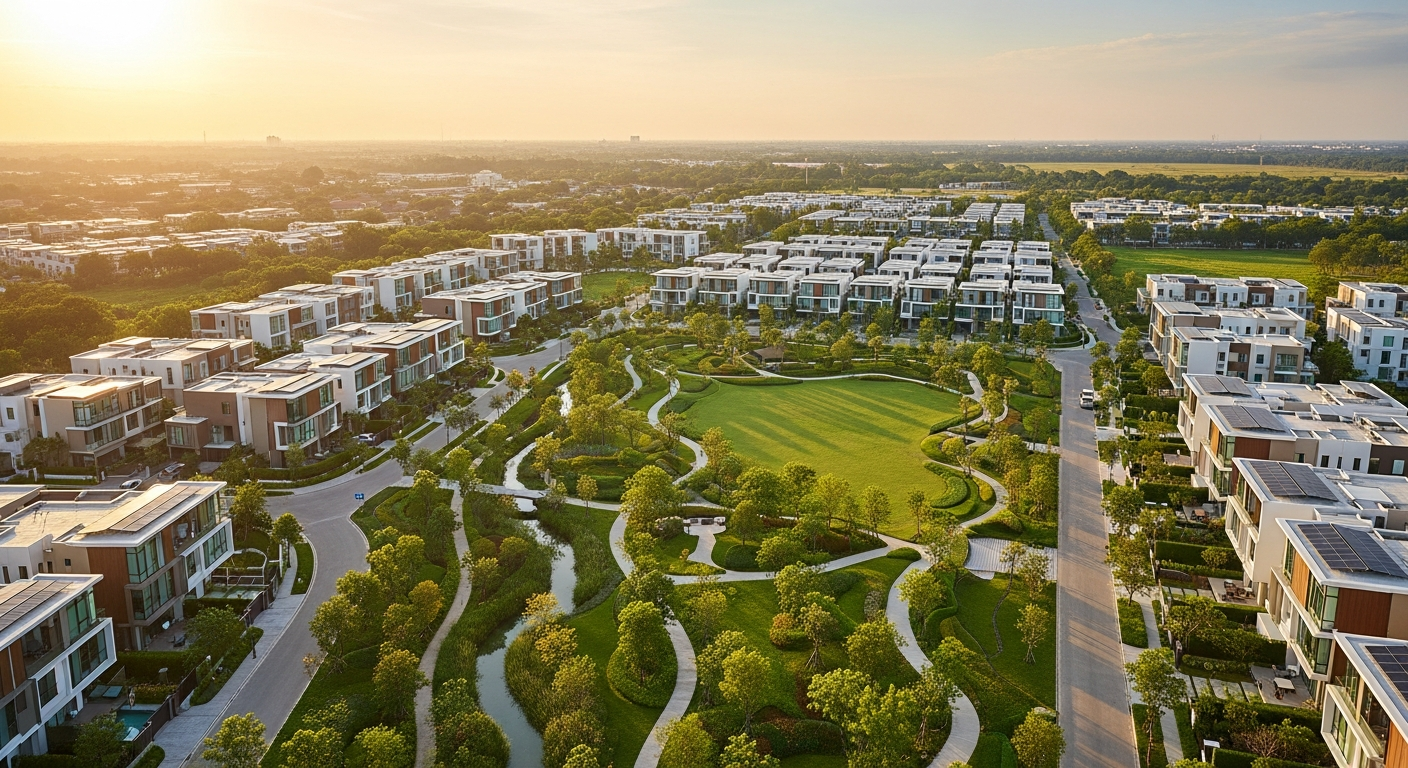
In Thailand, Open Space Ratio (OSR) is a planning control that measures how much of a site must remain unbuilt and usable as open area, based on local building and land-use regulations. It is used by planning authorities and local administrative bodies to limit overdevelopment and support light, air, drainage, access, and environmental balance in a project.
The Thai Legal Context
In Thailand, OSR is tied to urban planning and building control, governed through the Building Control Act, municipal zoning rules, and oversight by the Department of Public Works and Town & Country Planning. It is a development approval constraint, not just a lifestyle feature. A project may advertise generous open space, but what matters legally is whether the design satisfies setback, site coverage, and open area permit conditions. Foreign nationals do not receive special OSR rights; the rule is property-based. If OSR compliance is misunderstood, it can lead to redesign costs, reduced saleable area, or a project failing to obtain approval on time.
Benefits & Risks
Advantages
- Helps protect the project from overcrowding and supports better light, airflow, drainage, and livability.
- Can improve long-term value by creating a more attractive low-density project with better amenity space.
Risks & Disadvantages
- A low or misunderstood OSR can force smaller buildings, fewer units, or redesign costs.
- If a developer ignores local planning limits, the project can face permit problems, delay, or compliance disputes.
Showcase: How It Works
Let’s look at a real-world scenario to understand how Open Space Ratio (OSR) is applied during a property transaction.
The Scenario
- A developer plans an 8-unit detached-home project in Phuket on a 2,000 sq.m. plot.
- Local approval conditions require 700 sq.m. to remain open for access, drainage, and open space compliance.
- Only 1,300 sq.m. remains usable for house footprints, roads, and facilities.
The Result
The developer is forced to revise the design to 6 larger homes instead of 8. The THB 28,000,000 land cost is now spread over fewer units, and an extra THB 450,000 is spent on redesign and permit amendments.
Outcome:Lower density, higher cost per unit, compliant approval
Frequently Asked Questions
Is Open Space Ratio the same as land ownership?
No. OSR is a planning/design rule about how much land must stay open, while land ownership in Thailand is governed by the Land Code and related property laws.
Does OSR affect foreigners differently from Thai buyers?
Not directly. OSR applies to the project’s planning compliance, while foreign buyers are mainly affected by separate rules on condo quota, land ownership, leases, and registered rights.
Will OSR change the price of a condo or house project?
Yes, indirectly. Lower buildable density usually increases land cost per unit and can reduce the number of saleable units, which often pushes prices higher.
Related Terms
Why It Matters
OSR matters because it can directly change how much of a Thai site can actually be built on, which affects price, density, and resale value. A buyer or investor who ignores it may overpay for a project that cannot legally achieve the size or layout being marketed.
💡 REMAX Pro Tip
Before you reserve any new development, ask for the approved site plan and building permit drawings—not just the brochure—to confirm the open-space and buildable-area assumptions match the local authority approval.
Need more help?
Our expert agents and AI are ready to assist you.
Ask Line AI Ask WhatsApp AIFind an Agent