Back to Real Estate Definitions
Legal Right, Property Ownership
What is Superficies in Thailand?
Fact-checked by a REMAX Thailand Real Estate Expert
The Definition
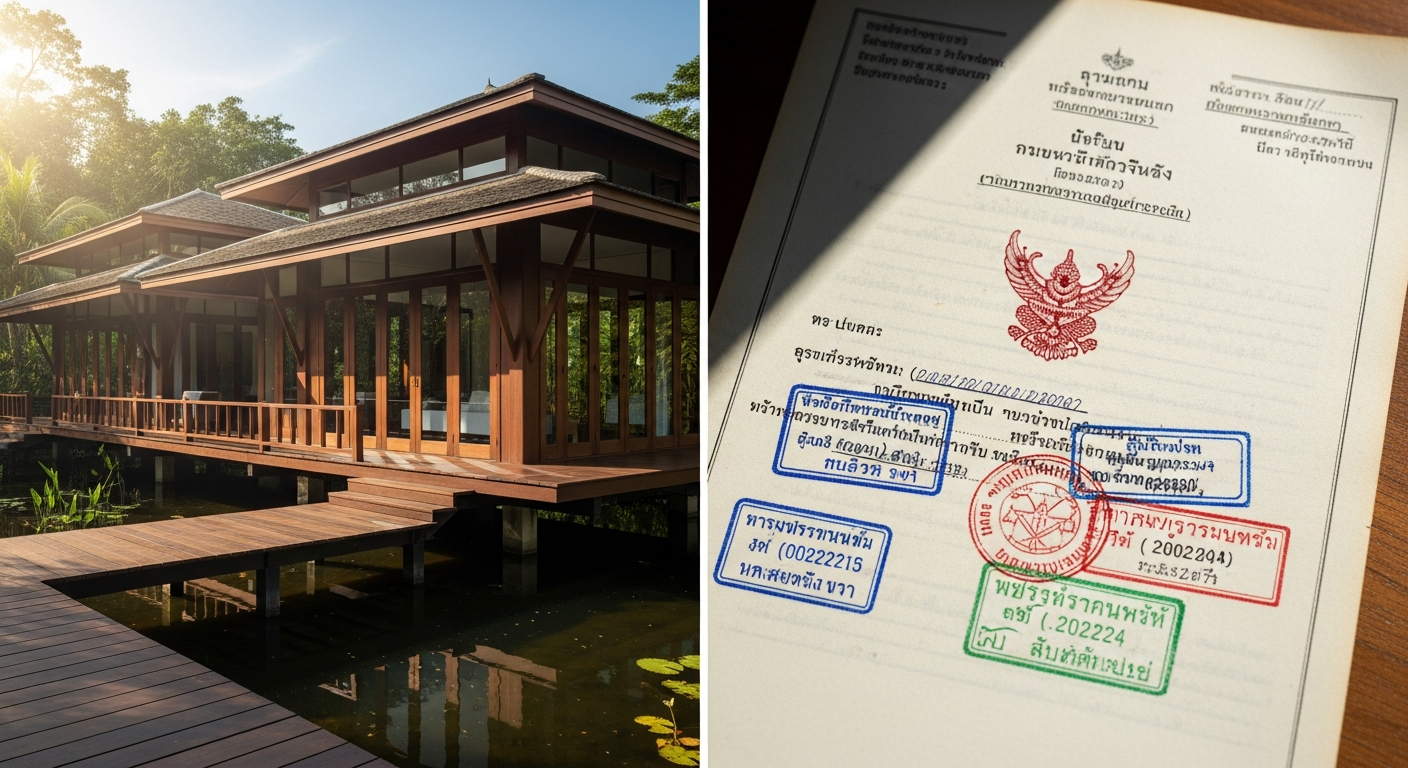
Superficies (สิทธิเหนือพื้นดิน) is a real right under Thai law allowing the superficiary to own buildings, structures, or plantations on land owned by another party, separating ownership of the land from the structures built on it. It can last up to 30 years (renewable) or for the lifetime of the landowner or superficiary.
The Thai Legal Context
Regulated by Sections 1410-1416 of the Civil and Commercial Code, superficies requires a written agreement registered at the Land Department to be enforceable against third parties. Registration fees are 1.1% of the agreed value. Available to both foreigners and Thai citizens, it does not confer land ownership, making it a legal method for foreigners to own structures on leased land. Unregistered agreements risk unenforceability. While Western buyers might expect it to function like a long-term ground lease, Thai practice often pairs it with a separate lease for land use, creating a unique hybrid structure.
Benefits & Risks
Advantages
- Enables foreigners to legally own houses or factories on leased land, bypassing land ownership bans.
- Transferable and inheritable, providing long-term security up to 30 years or lifetime.
- Supports diverse uses like residential villas, commercial projects, or agriculture without full land purchase.
Risks & Disadvantages
- Requires pairing with a lease for land use, adding complexity and dual registrations.
- Discretionary Land Department approval can lead to rejection and unenforceability.
- Expiry may force sale of structures to landowner, with no automatic renewal.
Showcase: How It Works
Let’s look at a real-world scenario to understand how Superficies is applied during a property transaction.
The Scenario
- A foreign expat leases 1 rai of land in Hua Hin from a Thai owner for 30 years.
- They register a superficies right for 5 million THB to build a villa.
- They build an 8 million THB villa and later sell the superficies and villa for 12 million THB.
The Result
The superficiary recovers full building investment plus profit, retaining structure ownership independent of the land.
Outcome:Full cost recovery + profit while legally transferring building ownership
Superficies vs. Leasehold
A quick breakdown of how this term compares to its closest alternative.
| Feature | Superficies | Leasehold |
|---|---|---|
| Ownership Rights | Grants ownership of buildings (real right). | Only provides usage without structure ownership. |
| Duration & Registration | Up to 30 years/lifetime, always registrable. | Over 3 years require registration; personal, not real right. |
| Inheritance & Transfer | Allows inheritance/transfer of building rights. | Less secure against third parties without registration. |
Frequently Asked Questions
Can foreigners register superficies?
Yes, foreigners can register it freely as it doesn't involve land ownership, often paired with a lease for villa projects.
What happens to buildings at expiry?
The landowner may buy them at market value; otherwise, the superficiary must remove them and restore the land's condition.
Is superficies better than usufruct?
Superficies gives outright building ownership, while usufruct is use-only without ownership—ideal for owning homes vs. mere occupancy.
Related Terms
Free Guide
Download "Thai Land Measurement Mastery Guide" to learn more and navigate safely.
Get the FREE PDF GuideWhy It Matters
Superficies protects investments in structures on non-owned land, critical for foreigners avoiding illegal land grabs. Mishandling or lack of registration leads to total loss and unenforceable claims.
💡 REMAX Pro Tip
Always pair superficies with a registered 30-year lease, pay the 1.1% fee upfront based on appraised value, and include renewal clauses.
Need more help?
Our expert agents and AI are ready to assist you.
Ask Line AI Ask WhatsApp AIFind an Agent