Back to Real Estate Definitions
Fact-checked by a REMAX Thailand Real Estate Expert
Legal Document
What is Tabien Baan in Thailand?
The Definition
The Tabien Baan is an official house registration book issued by the local district office (Amphur) in Thailand, recording individuals legally registered as residents at a specific property address. It serves as proof of residence for administrative purposes like utilities, visas, and banking, but does not prove property ownership, which is determined solely by the Land Department's title deed.
Global Expectations vs. Thai Reality
Western buyers often expect a house registration like the Tabien Baan to double as proof of ownership or tenancy rights, similar to a deed or utility bill in the US or Europe confirming both residency and property control. In Thailand, it is strictly an administrative residency record with no legal bearing on ownership, leading to confusion during transactions where buyers mistake it for title verification. Its role is limited to population census and services access, unlike Western documents that may link residency to property rights or taxes.
The Problem It Presents
Buyers unaware that Tabien Baan proves only residency—not ownership—may skip title deed checks, risking fraudulent sales where sellers list fake residents. Foreigners face delays or denials applying for Yellow Books due to strict Amphur requirements, complicating visas or utilities setup post-purchase. Sellers sometimes demand it unnecessarily during resales, inflating transaction friction despite Land Department non-requirement.
Foreigner vs. Thai Citizen Rules
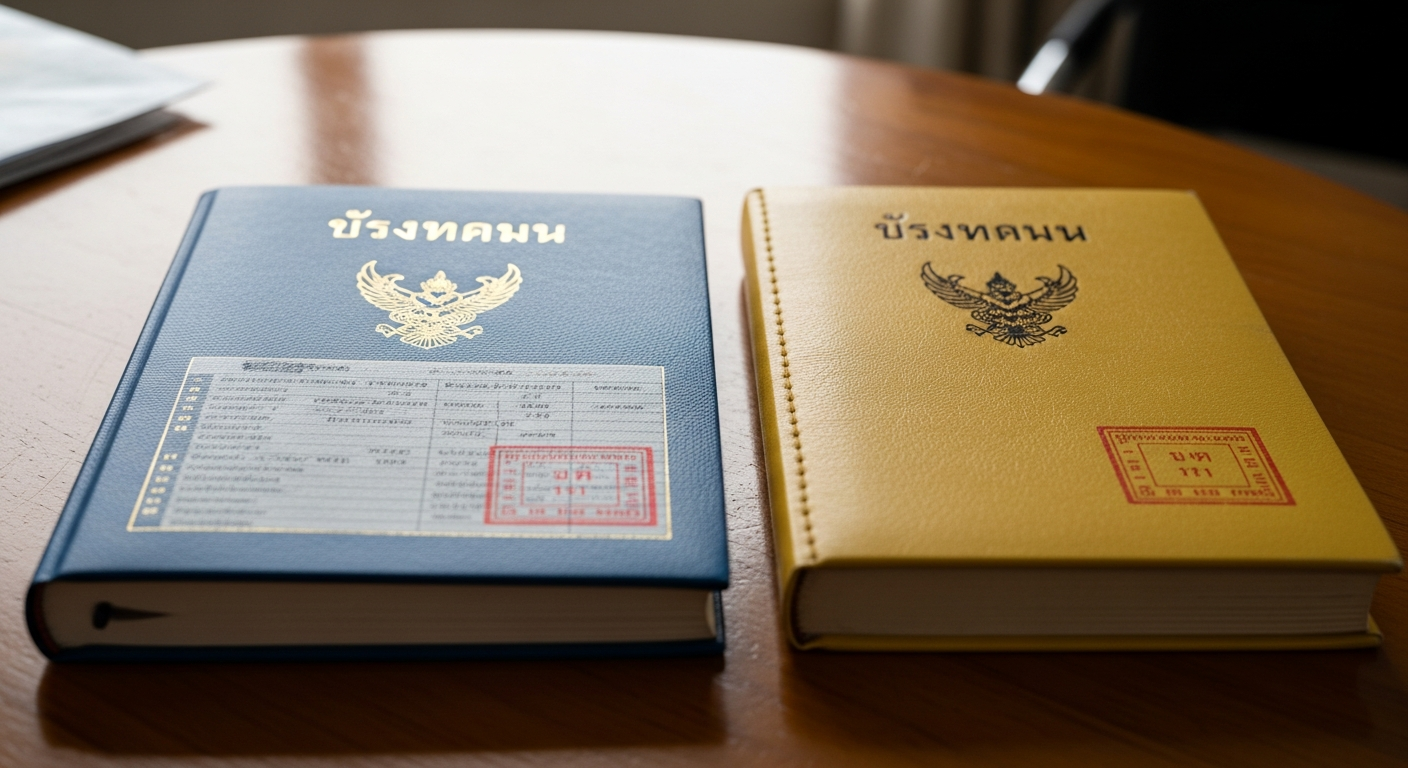
Thai citizens receive the Blue Tabien Baan (Thor Ror 14), a foundational identity document essential for ID cards, loans, and services. Foreign nationals can obtain the Yellow Tabien Baan (Thor Ror 13) if legally residing long-term (e.g., with long-stay visas or leases), but it is optional, harder to get, and offers limited value beyond admin proof without conferring ownership or citizenship paths.
The Thai Legal Context
The Tabien Baan is governed by local district offices (Amphur) under the Ministry of Interior for population registration and residency tracking. It interfaces with the Land Department for property-related matters but remains separate, as ownership transfers require title deeds, not Tabien Baan. No specific national law mandates it for property sales, but it supports compliance with Revenue Department tax filings and immigration via visa extensions.
Benefits & Risks
Advantages
- Essential for accessing Thai services like bank accounts, vehicle registration, and visa extensions.
- Provides official address proof for utilities and government aid.
- Registers house structure ownership for foreigners on leased land, strengthening leverage against eviction.
Risks & Disadvantages
- Misreliance as ownership proof leads to transaction failures or disputes.
- Yellow Book issuance varies by Amphur, often causing delays for foreigners.
- Loss or outdated entries complicate admin tasks, requiring updates at district offices.
Showcase: How It Works
Let’s look at a real-world scenario to understand how Tabien Baan is applied during a property transaction.
The Scenario
- Expat buys a condo in Chiang Mai with a leasehold and Elite Visa.
- Visits local Amphur with passport, lease, and photos to apply for Yellow Book.
- Pays 100 THB fee and registers as the sole resident.
The Result
The document is processed within hours, officially linking the expat to the property address for administrative purposes.
Outcome:
Yellow Tabien Baan Issued (Thor Ror 13)
Tabien Baan vs. Title Deed (Chanote)
A quick breakdown of how this term compares to its closest alternative.
| Feature | Tabien Baan | Title Deed (Chanote) |
|---|---|---|
| Primary Purpose | Residency Registration | Legal Ownership Proof |
| Issuing Authority | District Office (Amphur) | Land Department |
| Sales Requirement | Optional | Mandatory |
Frequently Asked Questions
Is Tabien Baan required to buy property in Thailand?
No, Land Department transfers rely on title deeds and contracts, not Tabien Baan, though sellers may hand over a blue one customarily.
Can foreigners get a Yellow Tabien Baan for any property?
Yes, with a long-stay visa/lease and Amphur approval, but it is not mandatory and issuance varies by office.
Does having a Tabien Baan mean I own the house?
No, it registers residents only; verify ownership via a Chanote title deed from the Land Office.
What if I lose my Tabien Baan?
Report to the Amphur for a duplicate (bring ID/visa, ~50 THB); updates for new residents need the house master's approval.
Why do agents push for Yellow Tabien Baan updates?
It proves address for expat services like loans and utilities, preventing post-buy hassles despite the lack of ownership link.
Related Terms
Free Guide
Download "Thai Land Measurement Mastery Guide" to learn more and navigate safely.
Get the FREE PDF GuideWhy It Matters
Ignoring Tabien Baan distinctions risks admin blockades in visas/utilities, derailing your Thai property investment's usability. Mastering it ensures smooth residency setup while avoiding over-reliance that masks true ownership gaps.
💡 REMAX Pro Tip
Always transfer or update Tabien Baan immediately post-purchase at Amphur with agent help—carry passport/visa copies and property docs to get Yellow Book same-day, unlocking banking/visas faster.
Common Misconceptions
Myth: Tabien Baan proves property ownership, like a title deed.
Reality: It only confirms registered residents at an address; ownership is via Land Department title deed exclusively.
Myth: Foreigners must have a Yellow Tabien Baan to buy or own Thai property.
Reality: It is optional and not required for purchases; blue books often transfer with houses, but hold minimal legal weight for non-Thais.
Need more help?
Our expert agents and AI are ready to assist you.
Ask Line AI Ask WhatsApp AI Find an Agent