Back to Real Estate Definitions Fact-checked by a REMAX Thailand Real Estate Expert
Legal Framework
What is Town and Country Planning Act in Thailand?
The Definition
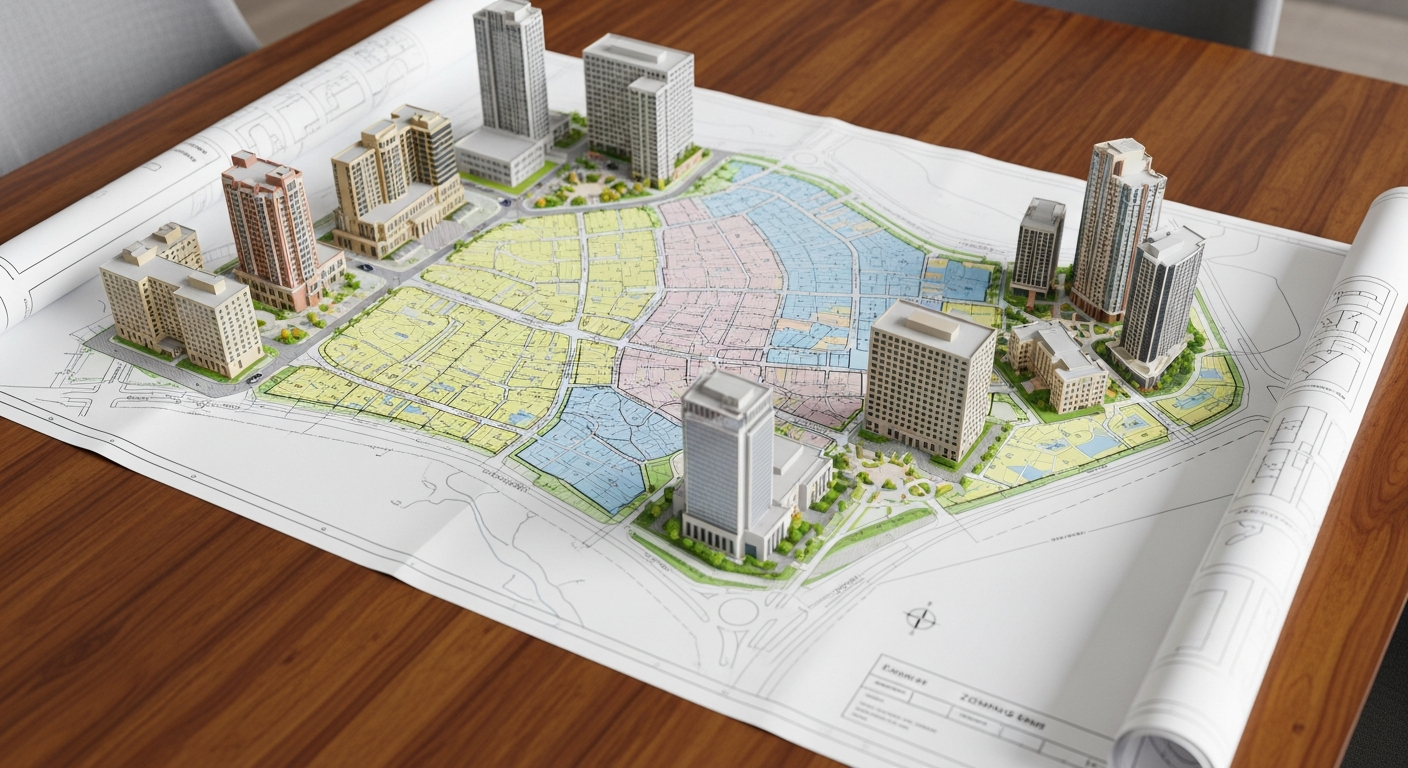
The Town and Country Planning Act (also known as the Town Planning Act B.E. 2518 or 1975, updated in B.E. 2562 or 2019) is Thailand's primary legislation governing urban and rural planning, zoning, and land development control. It establishes procedures for creating comprehensive and specific town plans, defining land use categories, building heights, density limits, setbacks, and requirements for development permits to ensure orderly city growth and resource efficiency. Local authorities enforce these through master plans and zoning regulations tailored to specific regions.
Global Expectations vs. Thai Reality
Western buyers often expect rigid, nationally uniform zoning laws with strong public participation and appeals processes, but in Thailand, the Act delegates detailed implementation to local authorities via region-specific ministerial regulations, royal decrees, and announcements, leading to variability across provinces like Phuket or Pattaya. Enforcement can be inconsistent due to local discretion, unlike the more centralized systems in the US or EU, where violations typically trigger swift fines or demolitions; here, non-compliance may result in administrative penalties or delays rather than immediate court-ordered action. Buyers might also anticipate environmental impact assessments (EIAs) as standard for all projects, but Thailand mandates them only for large-scale developments under complementary laws.
The Problem It Presents
Buyers unaware of zoning restrictions may purchase land zoned for agriculture only to find residential construction blocked, leading to permit denials and sunk costs. Non-compliant buildings risk demolition orders, fines, or resale issues, as seen in Phuket where illegal structures on former forest land face revocation. Delays in obtaining development permits can extend project timelines by months, inflating holding costs like interest on loans.
Foreigner vs. Thai Citizen Rules
The Act's zoning and planning rules apply equally to foreigners and Thai citizens, as it regulates land use and development permits rather than ownership rights. However, foreigners face indirect impacts via the Land Code, which prohibits direct land ownership (except limited condo units under the Condominium Act), so they must structure purchases through leases, companies, or Thai nominees, potentially complicating zoning-compliant developments. Thai citizens enjoy unrestricted land ownership within zoned areas, simplifying permit applications.
The Thai Legal Context
The Act operates alongside the Land Code B.E. 2497 (governing land ownership and transactions), Building Control Act B.E. 2522 (regulating construction standards), and Enhancement and Conservation of National Environmental Quality Act (for EIAs). Oversight falls under the Department of Town and Country Planning (DTCP) within the Ministry of Interior (MoI), with provincial governors handling rural plans and local administrations enforcing zoning via permits. Compliance is verified during due diligence at Land Departments.
Benefits & Risks
Advantages
- Ensures orderly urban growth, protecting property values by preventing incompatible developments like factories near residences.
- Guides infrastructure integration (roads, utilities), reducing long-term buyer costs in planned areas.
- Supports sustainable development through density and environmental controls.
Risks & Disadvantages
- Local variations create uncertainty; a zoning-compliant project in Bangkok may fail in Phuket due to differing decrees.
- Strict permit processes delay transactions, with non-compliance risking demolition or unfinanceable properties.
- Upgrading lower titles (e.g., Nor Sor 3 to Chanote) requires zoning alignment, adding complexity and fees.
Showcase: How It Works
Let’s look at a real-world scenario to understand how Town and Country Planning Act is applied during a property transaction.
The Scenario
- A foreign investor eyes a 5-rai plot in Pattaya zoned "residential low-rise" under the Town Planning Act's comprehensive plan, priced at 20 million THB.
- To build a 10-unit villa project, they submit a development permit application to the local authority, including plans compliant with height limits, setbacks, and density.
- Post-approval, construction aligns with the Building Control Act; total process adds 1 million THB in consultant/legal fees over 4 months.
The Result
The development permit is successfully granted, enabling the investor to proceed legally with their construction project and confirming land use compliance.
Outcome: 80 million THB project valuation upon completion
Town and Country Planning Act vs. Building Control Act
A quick breakdown of how this term compares to its closest alternative.
| Feature | Town and Country Planning Act | Building Control Act |
|---|---|---|
| Scope of Regulation | Covers overall land use, zoning, and macro-planning. | Handles specific design, safety, and construction standards. |
| Timing of Enforcement | Checked pre-development during due diligence. | Building permits are assessed after zoning is approved. |
| Regulatory Authority | Dictated by local master plans and regional decrees. | Regulated by uniform national engineering and safety standards. |
Frequently Asked Questions
What zones does the Act define?
It categorizes land into residential, commercial, industrial, agricultural, and green zones, with specifics like building heights and densities set by local plans.
How long does it take to get a zoning permit?
Typically 3-6 months, depending on project scale and local authority efficiency; large projects require Environmental Impact Assessments (EIAs), which can add 6+ months to the timeline.
Can zoning categories change over time?
Yes, via specific plans approved by the Ministry of Interior, but it is rare and political. Always check historical plans during due diligence.
Does the Act affect condominium developments?
Yes, projects must secure proper zoning for high-rise residential construction before any foreign sales quotas can be applied.
What happens if a property is non-compliant?
Owners face severe fines, demolition orders, or resale bans. The land may require an upgrade via the Land Department after attempting to secure rezoning.
Related Terms
Why It Matters
Ignoring the Town Planning Act risks buying unusable land or facing demolition, eroding your investment by 20-50% in legal battles and lost value. Proper checks ensure compliant, appreciating assets in Thailand's booming market.
💡 REMAX Pro Tip
Always request a "Status of Land" letter from DTCP before making an offer—it's your ultimate zoning shield, costing under 5,000 THB but preventing million-baht headaches down the road.
Common Misconceptions
Myth: Zoning rules are nationally uniform and easy to check online like in Western countries.
Reality: Rules vary heavily by local decrees and regional plans; verification requires manual Land Department searches and DTCP status letters.
Myth: Foreigners can ignore zoning rules if they are only buying condos.
Reality: Zoning affects entire projects; the foreign quota (49%) only applies post-zoning approval, and land use directly dictates allowable building types.
Need more help?
Our expert agents and AI are ready to assist you.
Ask Line AI Ask WhatsApp AI Find an Agent