Back to Real Estate Information 
Selling or Resale a House for sale Property Process Guide in Thailand
Selling a property in Thailand involves navigating a complex landscape of legal requirements, tax calculations, and market positioning. Unlike many western markets, the burden of bureaucratic procedure—from obtaining the correct debt-free letters for condos to calculating the progressive withholding tax—falls heavily on the seller at the Land Office. This guide outlines the strategic roadmap for homeowners, detailing how to prepare your asset for the market, accurately value it using local transaction data, and successfully close the deal while minimizing tax liabilities.
TL;DR - Quick Summary
- Financial Preparedness: Sellers must account for significant costs, including the 3.3% Specific Business Tax (if held < 5 years), 2% Transfer Fee, and Withholding Tax based on appraisal value.
- Strategic Pricing: Overpricing leads to stale listings; utilize a Comparable Market Analysis (CMA) to set a competitive price based on actual transaction data, not neighbor hearsay.
- Legal & Closing: Successful transfer at the Land Office requires precise documentation, including the Title Deed (Chanote), Debt-Free Letter (for condos), and a prepared cashier's check.
Understanding Transaction Costs and Taxes
Selling property in Thailand triggers specific statutory costs that must be paid at the Land Department upon transfer. The Transfer Fee is fixed at 2% of the government appraisal value, often shared 50/50 between buyer and seller, though this is negotiable. A critical cost is the Specific Business Tax (SBT), which is levied at 3.3% of the selling price or appraisal value (whichever is higher). However, this tax generally applies only if you have owned the property for less than 5 years. If you have owned the property for more than 5 years, you are exempt from SBT and instead pay a significantly lower Stamp Duty of 0.5%.
Additionally, sellers are responsible for Personal Income Withholding Tax. Unlike capital gains tax in other jurisdictions, this is a progressive tax calculated based on the government appraisal value of the property and the number of years of ownership, regardless of whether you made a profit or loss. For corporate sellers, the withholding tax is fixed at 1% of the higher of the sale price or appraisal value. Understanding these figures prior to setting your listing price is essential to ensure you achieve your desired net revenue.

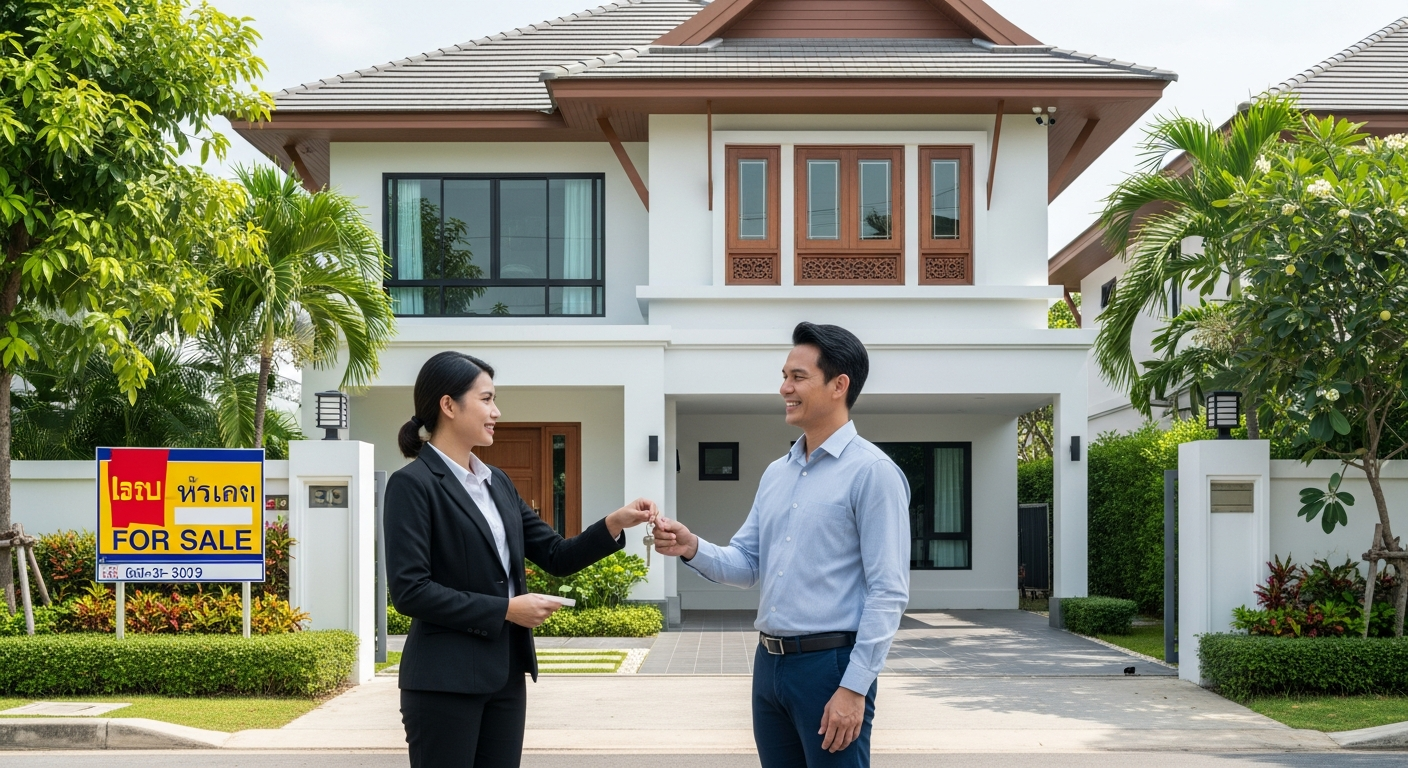


The Land Office Transfer Procedure
The transfer of ownership occurs physically at the local Land Department. You must present the original Title Deed (Chanote), ID cards, House Registration (Tabien Baan), and for condos, the critical Letter of Debt Freedom from the Juristic Person, certifying that all common area maintenance fees have been paid. Without this letter, the transfer cannot proceed.
On the day of transfer, all taxes and fees must be paid at the counter. It is standard practice to prepare a cashier's check for the exact amount to pay the Land Office, as well as separate cashier's checks for the transaction payment between buyer and seller. Having a lawyer or experienced agent present is highly recommended to verify that the title deed changes are recorded correctly.
💡 REMAX Pro Tip
If you move your name into the property's "Blue House Registration Book" (Tabien Baan) for at least one year prior to selling, you are exempt from the 3.3% Specific Business Tax. This simple administrative step can save you hundreds of thousands of Baht on the final transaction.
Written by REMAX Thailand Experts
Verified Real Estate Authority
This guide is researched and authored by our certified local market experts at REMAX Thailand. With decades of combined experience across the Kingdom, our team ensures every insight is backed by verified transaction data, strict legal compliance, and up-to-date market trends.
Need Personalized Advice?
Our expert agents and REX AI are ready to assist you with tailored real estate solutions.