⏱️ Estimated Reading Time: 4 mins
Back to Real Estate DefinitionsFinancial Term
What is Earnest Money in Thailand?
Fact-checked by a REMAX Thailand Real Estate Expert
The Definition
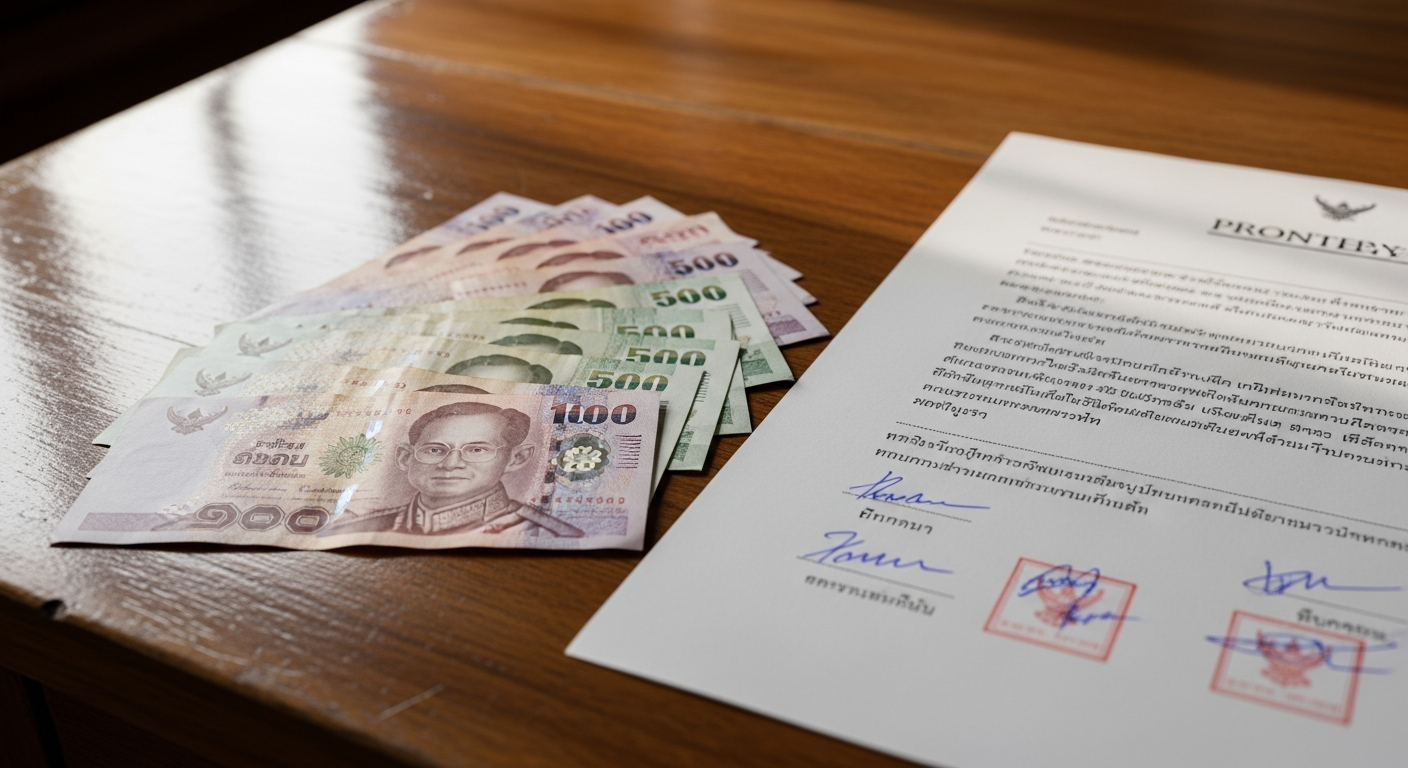
In Thailand's property market, earnest money (known as "arrathon" or deposit given at contract signing) is a sum paid by the buyer to the seller simultaneously with entering a sales agreement, serving as proof of contract formation and security for performance under Section 377 of the Civil and Commercial Code (CCC). It demonstrates the buyer's good faith and seriousness, typically ranging from 5-10% of the property price in real estate deals. If the buyer fulfills the contract, the earnest is refunded or deducted from the final payment; if they breach, the seller may forfeit it as damages.
Global Expectations vs. Thai Reality
Western buyers often expect earnest money to be held in a neutral third-party escrow with refund contingencies like inspection or financing failures, as in the US. In Thailand, it is directly given to the seller at contract signing without mandatory escrow, increasing risk if disputes arise, and lacks standardized contingencies unless explicitly negotiated. Forfeiture upon buyer default is stricter here, with no automatic refunds for minor issues, contrasting flexible Western protections.
The Problem It Presents
Without clear contract clauses, buyers risk total forfeiture of the deposit if they back out for any reason, as Thai law presumes it as damages under CCC Section 377, unlike conditional Western escrows. Sellers may demand high amounts (10%+) upfront without holding funds securely, exposing buyers to fraud if the seller vanishes or encumbers the property. Disputes over refunds lead to costly Civil Court battles, especially if earnest is verbal or post-signed, invalidating protections per Supreme Court rulings.
Foreigner vs. Thai Citizen Rules
Earnest money rules apply identically to foreigners and Thai citizens under CCC Section 377, as it's a general contractual mechanism not differentiated by nationality. Foreigners face broader property ownership restrictions (e.g., no land ownership, limited condos under Foreign Business Act), but earnest handling in reservations or leaseholds remains the same. Both must negotiate protections in contracts, though foreigners often use agents to mitigate risks in title transfers at the Land Department.
The Thai Legal Context
Governed by Section 377 of the Civil and Commercial Code (CCC), which deems earnest as proof of contract conclusion and allows forfeiture if the payer breaches, unless adjusted by agreement. The Department of Lands oversees property transfers linked to such contracts, while disputes may involve Civil Courts referencing Supreme Court Judgment No. 513/2538 (1995), confirming earnest must be given at signing, not later. No specific statutes mandate it, but it's accessory to written principal contracts like sales agreements.
Benefits & Risks
Advantages
- Signals buyer commitment, making offers more competitive in Thailand's fast-paced market.
- Provides seller security against time-wasters, with automatic forfeiture option if buyer defaults.
- Can deduct from final purchase price, streamlining closing for compliant deals.
Risks & Disadvantages
- No mandatory escrow means funds go directly to seller, heightening fraud or misuse risk.
- Strict timing (must be at signing) voids protections if paid later, leading to disputes over validity.
- Forfeiture is presumed damages, favoring sellers in breaches even if actual loss is less.
Showcase: How It Works
Let’s look at a real-world scenario to understand how Earnest Money is applied during a property transaction.
The Scenario
- A foreign expat offers on a 5 million THB Bangkok condo and pays 500,000 THB (10%) as earnest money directly to the seller's lawyer account at signing.
- Due diligence (title check) takes 30 days, with closing at the Land Office on Day 45.
- If buyer defaults post-signing without contingencies, seller keeps the 500,000 THB.
The Result
If buyer completes: earnest refunds/adjusts, total paid 5M THB. If seller breaches: they must return double (1 million THB) per negotiated clause or CCC rules.
Outcome:Buyer Default: Lose 500k | Seller Default: Pay 1M
Earnest Money vs. Down Payment
A quick breakdown of how this term compares to its closest alternative.
| Feature | Earnest Money | Down Payment |
|---|---|---|
| Timing | Contract Signing | Land Office Transfer |
| Purpose | Secures Performance | Funds Purchase |
| Risk | Forfeiture on Breach | Risk only if deal voids |
Frequently Asked Questions
Is earnest money required for every Thai property purchase?
No, it's optional under CCC, but standard (5-10%) in competitive markets to prove seriousness and reserve the property.
What if I pay earnest but the seller backs out?
Contract can stipulate seller returns double the amount as penalty, enforceable via Civil Court if specified.
Can foreigners use earnest for leasehold properties?
Yes, identical rules apply; it's common in 30-year leases to secure negotiations before full agreement.
Is earnest tax-deductible or subject to fees?
It's part of purchase price if deal closes (subject to transfer fees/SBT); no separate tax, but check Revenue Department for withholding.
How much earnest is typical for a 10M THB condo?
Usually 500K-1M THB (5-10%), negotiated but higher in hot areas like Pattaya to beat competing offers.
Related Terms
REMAX Thailand Editorial Team
Professionally reviewed content leveraging 30+ years of local real estate expertise.
Why It Matters
Mishandling earnest money can cost buyers 10%+ of property value instantly via forfeiture, derailing investments in Thailand's non-escrow system. Sellers gain leverage but risk disputes; mastering it ensures smooth transfers and protects against defaults.
💡 REMAX Pro Tip
Always negotiate a "double earnest" clause (seller returns 2x on their breach) and use a trusted lawyer's account for holding—never hand cash directly to avoid fraud in off-plan or resale deals.
Common Misconceptions
Myth: Always refundable on fail
Reality: Refunds require explicit contract contingencies; otherwise, CCC Section 377 allows full forfeiture on buyer breach, regardless of reason.
Myth: It's optional/post-pay
Reality: It must be cash/property given at signing to qualify as earnest; post-contract or guarantees are not earnest and lack CCC protections.
Need more help?
Our expert agents and AI are ready to assist you.
Ask Line AI Ask WhatsApp AIFind an Agent