⏱️ Estimated Reading Time: 4 mins
Back to Real Estate DefinitionsLegal Document, Transfer Mechanism
What is Endorsement in Thailand?
Fact-checked by a REMAX Thailand Real Estate Expert
The Definition
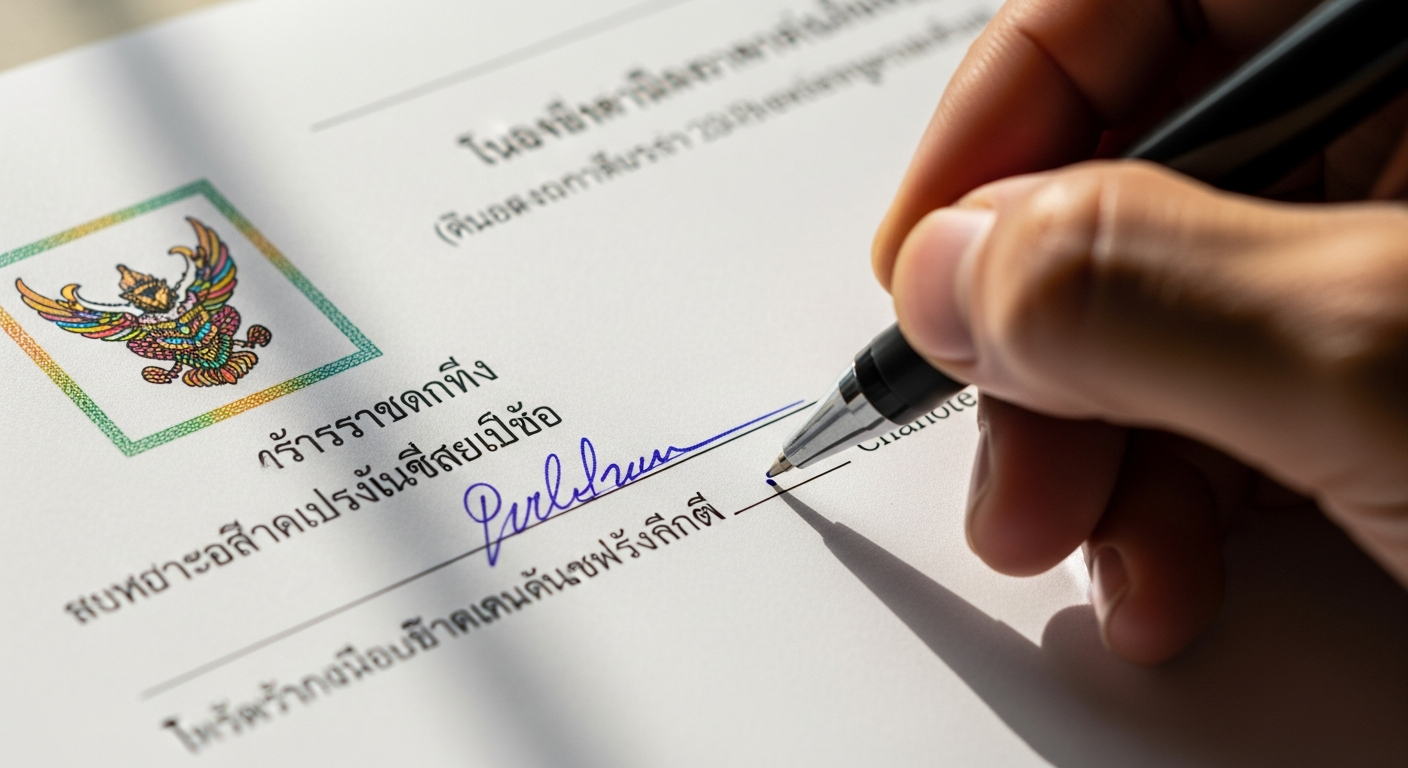
In the Thailand property market, an endorsement refers to the act of signing one's name on a negotiable instrument, such as a title deed (Chanote) or related document, to authorize the legal transfer of property ownership or rights during a transaction at the Land Department. This step is essential at closing to enable official registration of the new owner.
Global Expectations vs. Thai Reality
Western buyers might expect endorsement to involve simple digital signatures or notary stamps. In Thailand, it requires physical presence (or authorized Power of Attorney) at the local Land Department, with strict queuing, document verification, and immediate fund exchange via cashier's check. Liability differs as Thai endorsement ties directly to state-guaranteed title registration but lacks common escrow protections.
The Problem It Presents
Without proper endorsement, property transfers fail at the Land Department, leaving buyers without legal title and exposing them to seller default or fraud. Foreigners face extra hurdles if POA lacks DOL endorsement, causing delays. Unexpected costs can arise from rushed notary fees or witness requirements if unprepared.
Foreigner vs. Thai Citizen Rules
Thai citizens can freely endorse and transfer full ownership of land via standard title deed processes. Foreigners, prohibited from owning land under the Land Code, use endorsement primarily for condo units (up to 49% foreign quota) or leaseholds, often requiring additional structures like company shares or POA, with stricter DOL scrutiny.
The Thai Legal Context
Endorsement is governed by the Land Code B.E. 2497 (1954), which mandates it for title deed transfers at Department of Lands (DOL) offices. Related processes fall under the Civil and Commercial Code for negotiable instruments, with oversight from the Revenue Department for associated taxes like transfer fees.
Benefits & Risks
Advantages
- Provides state-backed legal certainty for ownership transfer, making titles marketable and bankable.
- Enables remote transactions via endorsed POA, ideal for overseas buyers using trusted agents.
Risks & Disadvantages
- POA endorsements expire or limit scope, risking deal collapse if not time-limited correctly.
- No inherent escrow; funds via cashier's check expose parties to agent mishandling without dual oversight.
Showcase: How It Works
Let’s look at a real-world scenario to understand how Endorsement is applied during a property transaction.
The Scenario
- Thai seller agrees to transfer a 5 million THB Bangkok condo to a foreign buyer.
- Buyer pays deposit, then at closing (day 30), seller endorses title deed at Land Department.
- Buyer presents endorsed POA (if remote) and cashier's check; DOL registers transfer (2% fee).
The Result
The DOL stamps the new title in the buyer's name after verifying the endorsement and collecting fees.
Outcome:Ownership transfers legally; buyer gets title, seller nets ~4.35M THB post-fees.
Endorsement vs. Power of Attorney (POA)
A quick breakdown of how this term compares to its closest alternative.
| Feature | Endorsement | Power of Attorney (POA) |
|---|---|---|
| Purpose | Finalizes title transfer at DOL | Authorizes agents pre-closing |
| Duration | One-time for ownership | Revocable/Time-limited (e.g., 1 year) |
| Outcome | State-guaranteed title | Can expire/invalidate deals |
Frequently Asked Questions
Can I endorse a title deed remotely from abroad?
Yes, via a DOL-endorsed POA to a trusted Thai rep (e.g., agent), who handles signing at closing with your cashier's check.
What if the seller refuses to endorse at closing?
Deals are void without it; hold funds in escrow-like SPA terms and involve lawyers for enforcement under the Civil Code.
Does endorsement apply to condos for foreigners?
Yes, for eligible units under the 49% quota; DOL checks eligibility before stamping the new foreign-owned title.
How much does endorsement cost beyond taxes?
Minimal (under 1,000 THB stamping/notary); main costs are the 2% transfer fee and 0.5% withholding tax.
Is endorsement needed for leasehold transfers?
Yes, the seller endorses the lease agreement at the DOL for legal assignment to the new lessee.
Related Terms
Why It Matters
Ignoring proper endorsement risks losing your deposit or property to invalid transfers, as Thai titles aren't binding without DOL stamping. Mastering it protects investments by ensuring clean, registered ownership amid strict foreign rules.
💡 REMAX Pro Tip
Always get POA pre-endorsed at the target Land Department (costs ~2,000 THB) and use cashier's checks named to the seller—this avoids 90% of remote closing snags.
Common Misconceptions
Myth: Endorsement is just a formality like signing a check anywhere
Reality: It must occur at the specific Land Department with queuing, witnesses, and cashier's checks for validity under the Land Code.
Myth: Foreigners can endorse land titles like Thais
Reality: Foreigners are barred from land ownership; endorsement applies only to condos/leaseholds with quota checks.
Need more help?
Our expert agents and AI are ready to assist you.
Ask Line AI Ask WhatsApp AIFind an Agent