⏱️ Estimated Reading Time: 5 mins
Back to Real Estate DefinitionsAppraisal Principle
What is Highest and Best Use in Thailand?
Fact-checked by a REMAX Thailand Real Estate Expert
The Definition
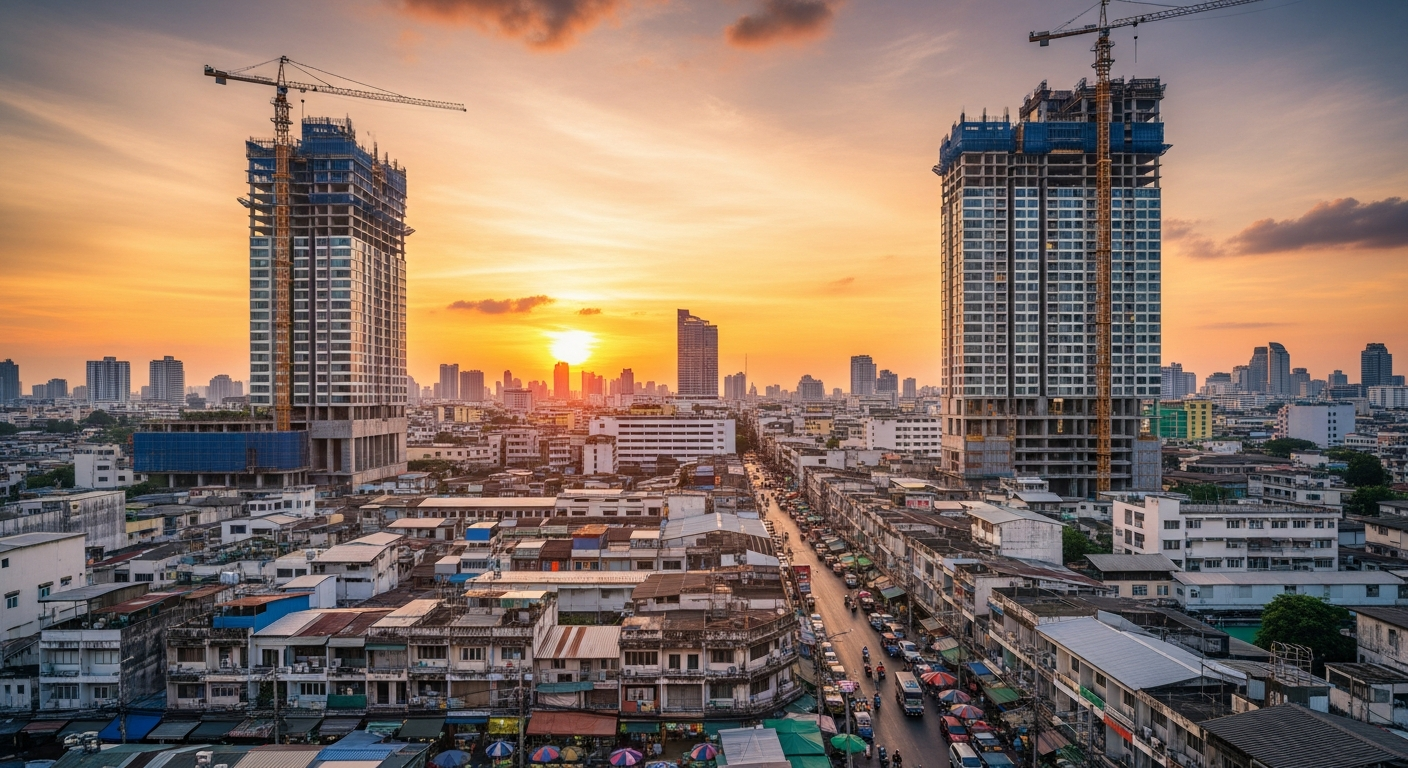
In the Thailand property market, highest and best use is the reasonably probable use of land or improved property that is physically possible, legally permissible under local zoning and regulations, financially feasible, and maximizes net income and land value. Thai appraisers and agents, such as those at RE/MAX Thailand, apply this concept to guide development decisions, valuations, and investment strategies by evaluating factors like market demand in areas such as Bangkok condos or commercial plots. It often determines whether redeveloping a site—for instance, converting low-rise residential land into high-density condos—yields the highest economic return.
Global Expectations vs. Thai Reality
Western buyers might expect highest and best use to heavily emphasize eminent domain compensation or strict zoning enforcement as in the US, but in Thailand, it focuses more on practical development feasibility amid rapid urbanization and foreign ownership limits, where condos dominate over land for foreigners. Thai practice integrates local market dynamics like high condo demand in Bangkok, but faces unique hurdles such as bureaucratic land use approvals, differing from faster Western permitting processes. Additionally, social and community benefits receive less formal weight compared to pure financial productivity in Western appraisals.
The Problem It Presents
Buyers ignoring highest and best use may overpay for underutilized land zoned only for low-density housing in high-demand areas, facing redevelopment barriers and value stagnation. Sellers risk undervaluing properties by not assessing alternative uses, like converting a house plot to commercial, leading to lost income potential amid Thailand's condo boom. Unexpected costs arise from failed feasibility studies, such as zoning change applications costing 50,000-200,000 THB in fees and delays of 6-12 months.
Foreigner vs. Thai Citizen Rules
The principle itself applies equally, but Thai citizens can pursue any legally permissible use including full land ownership, while foreigners are restricted by the Land Code and Condominium Act to condo units (up to 49% foreign quota per building), limiting their highest and best use to strata-title investments rather than land development. This often shifts foreign focus to high-rise condos in prime areas like Bangkok's Din Daeng, where market demand supports maximum value, unlike citizens who can develop raw land freely. No direct tax or liability differences arise from the concept, but enforcement via zoning applies uniformly.
The Thai Legal Context
This concept is governed by the Town and Country Planning Act B.E. 2562 (2019), enforced by the Department of Public Works and Town & Country Planning (DPT), which dictates zoning (e.g., residential, commercial) and land use permissibility. The Land Department oversees title deeds and physical feasibility via Nor Sor 3 or Chanote classifications, while environmental impact assessments under the Enhancement and Conservation of National Environmental Quality Act fall to the Office of Natural Resources and Environmental Policy and Planning (ONEP). Appraisals aligning with highest and best use also reference Revenue Department guidelines for property valuation in transfers.
Benefits & Risks
Advantages
- Maximizes property value by identifying high-yield uses like condo development in urban zones, boosting ROI for investors.
- Guides informed buying/selling, as RE/MAX agents use it to recommend developers with proven tracks in feasible projects.
- Supports strategic planning, aligning with market trends like Bangkok's commercial demand for higher net returns.
Risks & Disadvantages
- High upfront costs for appraisals and zoning checks (20,000-100,000 THB) if the optimal use proves unfeasible.
- Legal hurdles like foreign quotas block foreigners from land-based highest uses, forcing suboptimal condo-only strategies.
- Market shifts (e.g., oversupply of similar units) can render a "best use" financially unviable post-purchase.
Showcase: How It Works
Let’s look at a real-world scenario to understand how Highest and Best Use is applied during a property transaction.
The Scenario
- A 1-rai plot in Bangkok's Din Daeng district, zoned mixed-use with a current single-family house valued at 10 million THB, undergoes appraisal.
- Physical possibility allows a 30-unit condo tower (site shape and access support it); legal permissibility confirmed via DPT zoning for high-density residential/commercial.
- Financial feasibility shows development costs of 45 million THB yielding 80 million THB resale value (rental yield 6-8% annually, demand high near universities).
The Result
Among options like keeping the house (10M THB), retail shophouse (15M THB), or condo (80M net after 25M profit margin), the condo is maximally productive.
Outcome:Highest and best use is condo development, valuing the site at 25 million THB (demolition 500,000 THB subtracted).
Highest and Best Use vs. Current Use Valuation
A quick breakdown of how this term compares to its closest alternative.
| Feature | Highest and Best Use | Current Use Valuation |
|---|---|---|
| Zoning Focus | Requires legal permissibility checks via DPT | Ignores potential rezoning |
| Value Outcome | Optimizes for max net return (+300% uplift) | Caps at status quo |
| Application Stage | Appraisals/investments pre-transaction | Quick sales, suits existing setup |
Frequently Asked Questions
How does highest and best use affect condo investments for foreigners?
It steers toward high-density buildings in quota-eligible projects for max yields (5-7%), but limits land plays—RE/MAX checks quotas upfront.
What if my property's current use differs from highest and best?
Appraisal tests (physical, legal, financial) may recommend changes like adding retail; costs ~50,000 THB for zoning application.
Does it apply to leasehold properties?
Yes, evaluating lease terms against redevelopment feasibility for highest value, common in 30-year foreigner leases.
How long to determine highest and best use in Thailand?
2-4 weeks via appraiser and DPT review, faster with agent networks in Bangkok.
Can it change over time?
Yes, market shifts (e.g., new BTS lines) alter financial feasibility—annual RE/MAX market analysis keeps it current.
Related Terms
Why It Matters
Understanding highest and best use prevents overpaying for mismatched properties or missing redevelopment profits in Thailand's dynamic market, directly impacting ROI by 20-50% on urban land. Sellers and buyers who prioritize it align investments with zoning and demand, safeguarding against value traps like oversupplied low-yield units.
💡 REMAX Pro Tip
Always commission a RE/MAX valuation report early—it cross-checks DPT zoning against market data to confirm highest and best use, saving you 100,000+ THB in misguided feasibility studies.
Common Misconceptions
Myth: Current use is best use
Reality: It evaluates hypothetical optimal uses (e.g., demolition for condos) that maximize value, even if differing from existing setup, as long as physically and legally possible.
Myth: Foreigners have equal rights
Reality: Foreign ownership caps redirect highest use to condos, not land development, per the Condominium Act.
Need more help?
Our expert agents and AI are ready to assist you.
Ask Line AI Ask WhatsApp AIFind an AgentTrust the Experts
Content written and verified by the RE/MAX Thailand Editorial Team. Experts in Thai Real Estate Law, Valuation, and Foreign Ownership.