⏱️ Estimated Reading Time: 6 mins
Back to Real Estate DefinitionsCommercial Real Estate
What is Industrial Property in Thailand?
Fact-checked by a REMAX Thailand Real Estate Expert
The Definition
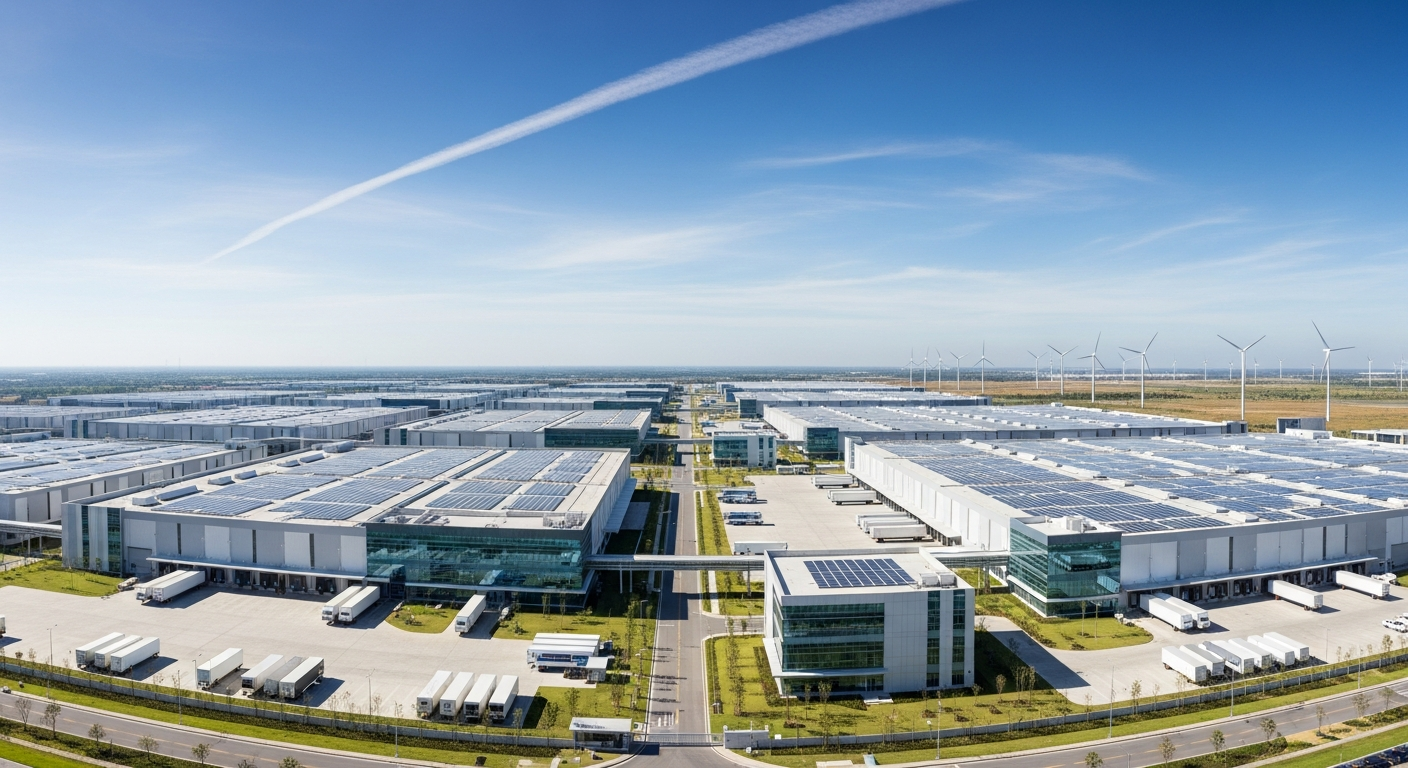
Industrial property in Thailand refers to **land and structures designated for manufacturing, warehousing, logistics, and production operations**, typically located within Industrial Estates or the emerging "Econopolis" zones. These properties are governed by specific zoning regulations, the Industrial Estate Authority of Thailand (IEAT), and are subject to distinct tax incentives and ownership rules compared to residential or commercial office properties.
Global Expectations vs. Thai Reality
Western investors typically expect industrial property markets to function with standard supply-demand cycles. In Thailand, the market operates under government-directed strategy—specifically "Thailand 4.0" and the Eastern Economic Corridor (EEC). This means availability is constrained by policy, not just market forces. Factory vacancy rates are artificially maintained below 5%, creating leverage for landlords. Unlike in the West, foreign direct land ownership is prohibited unless under specific Board of Investment (BOI) provisions.
The Problem It Presents
Industrial property shortages create significant pressure for manufacturers. With vacancy rates below 5%, operators have little negotiating power—landlords dictate terms. Foreign operators face complex hurdles: securing BOI promotion status is often a prerequisite to land ownership, and failure to navigate the new e-Land registration system within strict 7-day windows results in automatic application rejection.
Foreigner vs. Thai Citizen Rules
Thai nationals may own industrial land outright. Foreign nationals are **prohibited from direct land ownership** except under BOI promotion certificates. The new BOI notification (effective Jan 2026) requires strict online application via the e-Land system; failure to comply with 7-day amendment windows leads to rejection. Unlike Thais, foreigners cannot simply sign a standard conveyancing deed without this regulatory approval.
The Thai Legal Context
Industrial properties are governed by the **Industrial Estate Authority of Thailand (IEAT)**, which administers zones bundling utilities and infrastructure. The **Thailand Board of Investment (BOI)** issues promotion certificates unlocking tax incentives (up to 13-15 years CIT exemption) and land ownership rights. The **EEC Authority** oversees the three-province development zone. All land transfers fall under the Land Code Act, which generally restricts foreign holding unless superseded by BOI privileges.
Benefits & Risks
Advantages
- **Strong asset appreciation potential** due to supply shortages and gov incentives.
- **Substantial tax incentives**: Up to 15 years CIT exemption + import duty waivers.
- **Integrated infrastructure ecosystem** in Econopolis zones reduces operational costs.
Risks & Disadvantages
- **Extreme tenant leverage imbalance**: Landlords dictate unfavorable lease terms.
- **Regulatory complexity**: BOI and e-Land systems have strict compliance hurdles.
- **Supply chain dependency risk** due to geographic concentration in EEC zones.
Showcase: How It Works
Let’s look at a real-world scenario to understand how Industrial Property is applied during a property transaction.
The Scenario
- Singapore-registered electronics manufacturer seeks 50,000 sqm factory in Rayong (EEC).
- Obtains BOI "Digital and Electronics" certification for 15-year tax exemption and land rights.
- Purchases land in Econopolis zone (400M THB) and builds custom facility (150M THB).
The Result
By building a purpose-built facility on owned land rather than leasing, the company avoids landlord escalation clauses and leverages the BOI status for 15 years of tax freedom. The infrastructure bundle in the Econopolis further reduces operational costs.
Outcome:Net ROI on tax savings: 231% over 15 years (1.35 Billion THB saved)
Industrial Property vs. Standard Leasehold
A quick breakdown of how this term compares to its closest alternative.
| Feature | Freehold (BOI) | Standard Leasehold |
|---|---|---|
| Ownership Duration | Perpetual (Foreigner via BOI) | 3-5 Years (Landlord Discretion) |
| Tax Incentives | Up to 15 Years CIT Exemption | None (Standard Tax Rates) |
| Cost Control | Owner controlled; no escalation | Landlord dictates renewal rates |
Frequently Asked Questions
As a foreigner, can I directly own industrial land in Thailand?
Direct foreign land ownership is prohibited unless under **BOI promotion certificates** with government approval. Nominee structures are illegal; BOI is the safe, legal path.
What is the typical timeline to acquire industrial land?
Plan for 5-7 months: 2-4 months for BOI approval, plus e-Land registration (with strict 7-day amendment windows) and standard conveyancing.
If I lease factory space, how can I protect myself?
Insist on a **fixed base rent with a 3-5% annual cap** (not landlord-discretionary) and a right-of-first-renewal clause. In the current tight market, professional negotiation is key.
Are there tax benefits to owning industrial property?
Yes. Owners with BOI certification in EEC zones can access **up to 15 years of corporate income tax exemption**, saving billions for large-scale operations compared to leasing.
What are "Econopolis" zones?
These are integrated IEAT ecosystems bundling utilities, multimodal logistics, and renewable energy. They offer lower operational costs and maximum "Thailand 4.0" incentives.
Related Terms
REMAX Thailand Editorial Team
Verified by local real estate experts and legal advisors. Trust REMAX for accurate, up-to-date Thailand property insights.
Why It Matters
Industrial property decisions—whether to own, lease, or build—directly determine your operational cost structure for 5-15+ years. In Thailand's ultra-tight factory market, **the difference between securing BOI-backed land ownership versus a standard lease can mean millions of THB in escalation costs and zero asset appreciation**.
💡 REMAX Pro Tip
**Don't compete for scarce leased factory space—build instead.** Econopolis zones offer ownership with 15-year tax shields for only slightly higher upfront costs than a 5-year lease. Most foreign operators don't realize this until they're locked into unfavorable leases.
Common Misconceptions
Myth: I can buy industrial land like a condo.
Reality: False. Foreigners need BOI certification; standard conveyancing is not available.
Myth: Industrial property is easily available.
Reality: Vacancy is <5%. New supply is constrained. Securing space takes 12-24 months.
Need more help?
Our expert agents and AI are ready to assist you.
Ask Line AI Ask WhatsApp AIFind an Agent