Back to: Definitions
Legal Party
What is a Grantor in Thailand?
Fact-checked by a REMAX Thailand Real Estate Expert
The Definition
In Thailand, a grantor is the person or entity that transfers, grants, or creates a property right for another party in a legally recognized transaction, most often through a sale, lease, mortgage, usufruct, superficies, or other registered right. In practical Thai property transactions, the grantor is usually the current owner or right-holder who signs before the Department of Lands to give the buyer or grantee enforceable rights.
The Thai Legal Context
In Thailand, the concept of a grantor is governed mainly by the Civil and Commercial Code for contractual rights such as leases and mortgages, the Land Code for land ownership and title registration, and the Condominium Act for foreign and Thai condominium ownership rules. The key government body is the Department of Lands, because the transfer or creation of most real property rights only becomes legally effective once it is registered there; for foreign buyers, supporting evidence such as an FET form or bank credit advice may also be needed to show that purchase funds entered Thailand properly. Compared with many Western jurisdictions, Thailand is more formal about registration and more restrictive about who can own land. Foreign nationals also face different rules from Thai citizens in some transactions, especially for freehold land ownership and condominium quota limits (49% foreign quota). Friction points arise when the grantor cannot legally transfer the exact right expected, or unexpected costs (transfer fee, withholding tax, stamp duty, specific business tax) affect the final price.
Benefits & Risks
Advantages
- A properly identified grantor allows the right to be legally transferred and registered at the Land Department.
- The grantor can create different rights beyond a sale, including a lease, usufruct, superficies, or mortgage.
Risks & Disadvantages
- If the grantor lacks the legal authority to transfer the right, the buyer may receive nothing enforceable.
- Missing Land Department registration, quota issues, or absent FET documentation can defeat the deal.
Showcase: How It Works
Let’s look at a real-world scenario to understand how a Grantor is applied during a property transaction.
The Scenario
- A Thai seller owns a Chanote-title condominium and agrees to sell it for THB 8,500,000 to a foreign buyer.
- Foreign quota is available, and the buyer remits funds with proper FET bank documentation.
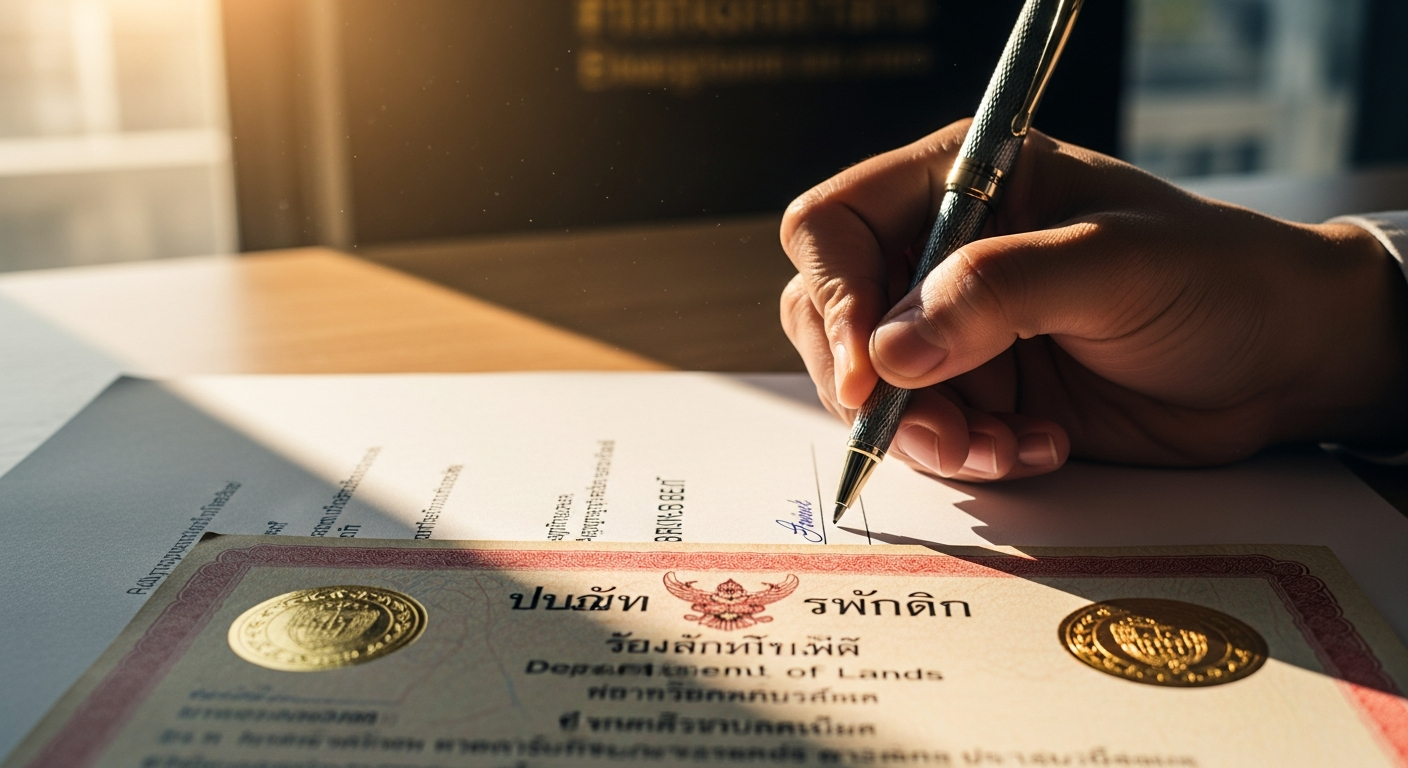
- The seller signs as the grantor at the Land Office to transfer title.
The Result
The Land Department records the transfer, and parties agree to split the 2% transfer fee equally, with the seller paying remaining seller-side taxes.
Outcome:Transfer fee: THB 170,000 (THB 85,000 buyer share) + Seller's separate taxes.
Frequently Asked Questions
Is the grantor always the seller in Thailand?
Usually yes in a sale, but not always. In a lease, usufruct, or superficies transaction, the grantor may be the owner who gives the right rather than someone selling the property outright.
Can a foreigner be a grantor in Thailand?
Yes, if the foreigner already holds a legally recognized right that can be transferred or granted under Thai law. However, foreigners cannot generally grant land ownership because they cannot usually own land freehold in the first place.
Does the grantor have to sign at the Land Office?
For most registered property transfers and rights, yes. Registration with the Department of Lands is what makes the transfer effective against third parties.
Related Terms
Why It Matters
If you misunderstand who the grantor is, you may think you are buying something that the seller is not legally able to give you. In Thailand, getting the grantor, title, and registration process right is what protects your ownership, leasehold, or other registered right from later dispute.
💡 REMAX Pro Tip
Always verify the exact right being transferred before you sign—especially for foreign buyers—because in Thailand the seller may be able to grant the building right but not the land right. A good agent should check the title deed, foreign quota, and Land Department registration path before any deposit is paid.
Need more help?
Our expert agents and AI are ready to assist you.
Ask Line AI Ask WhatsApp AIFind an Agent