Back to Real Estate Information
Difference Between Condos vs Apartments for sale and rent
The difference between condos and apartments in Thailand primarily comes down to legal ownership and governance under the Thailand Condominium Act of 2008. While they may look identical from the outside, a condo offers outright freehold ownership with a government-issued Chanote title deed and individual juristic management. Conversely, apartments are typically single-owner, leasehold properties that offer possession rights without full ownership. Whether you are looking for properties located 500 meters from a BTS Skytrain station in Sukhumvit or a quiet suburb, understanding these legal distinctions ensures your real estate investment or rental agreement is secure and fully compliant with local Thai law.
TL;DR - Quick Summary
- Condos are licensed under the Thailand Condominium Act offering freehold Chanote title deeds (with a 49% foreign ownership quota), while apartments are leasehold properties owned by a single entity.
- Under the May 2018 consumer protection law, renting an apartment from a Business Operator (5+ units) legally limits security deposits to one month and prevents utility markups.
- Condo owners pay Common Area Maintenance (CAM) fees and manage the building jointly, whereas apartment tenants follow unified building rules without ownership rights.
Legal Ownership and the Thailand Condominium Act
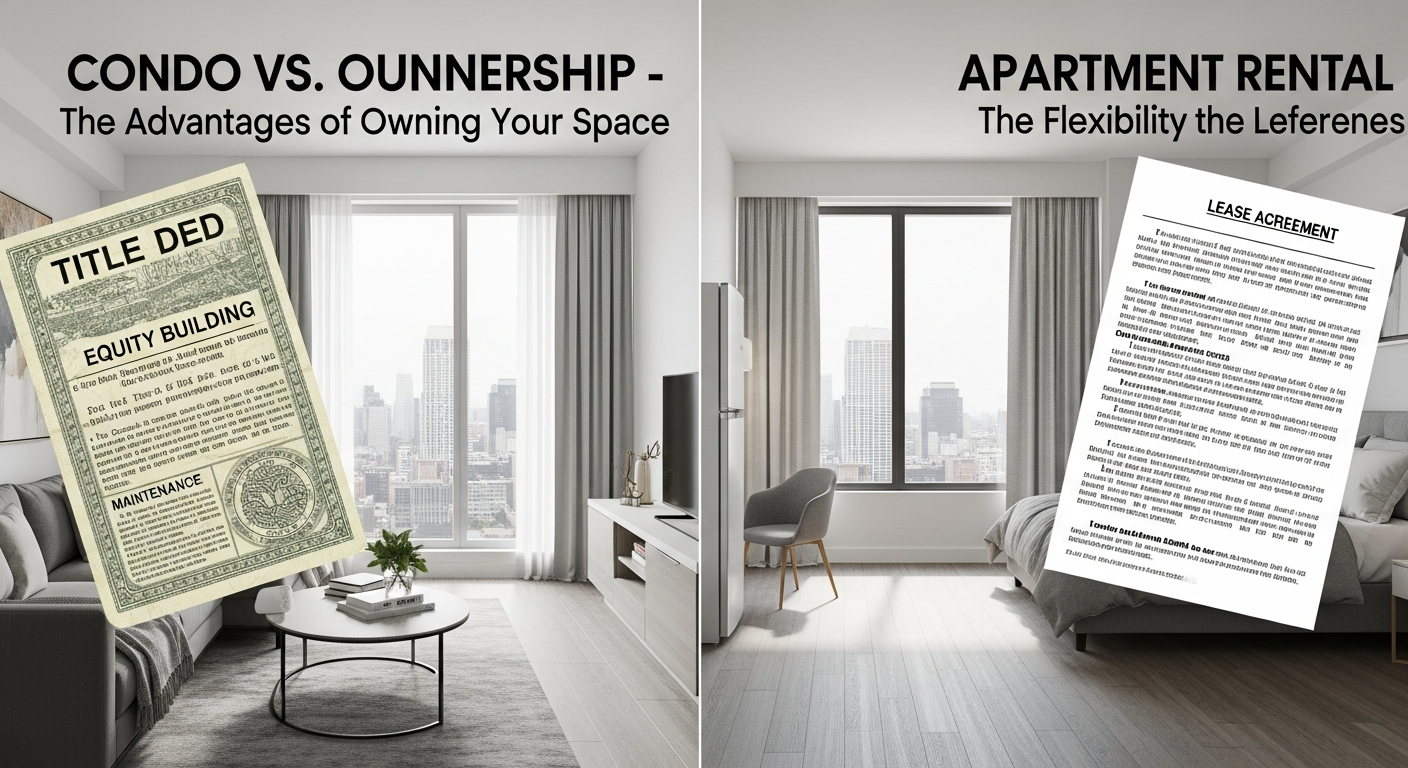
Legal ownership is the primary distinction, as condos provide a government-issued Chanote title deed under the Thailand Condominium Act of 2008, whereas apartments strictly offer leasehold possession. Any foreign national can qualify for condo ownership under the Foreigner Quota, which dictates that up to 49% of the total sellable floor area of a condominium project can be wholly owned by non-Thais. The remaining 51% must be registered under Thai nationality. The transfer of the title deed happens directly at the local Land Department, giving the buyer exclusive, absolute ownership of the unit and joint ownership of the common areas. Condos are highly sought after because owners can remodel their individual units as they see fit, provided they do not alter the structural integrity of the jointly-owned building.
In contrast, an apartment building is typically owned entirely by one individual or corporate entity. You cannot buy an apartment unit freehold; you are merely acquiring possession of the individual unit as a lessee. The lease limits possession to a maximum of 30 years and automatically terminates if the lessee passes away. Because there is no joint ownership, the building's management and rule enforcement are dictated entirely by the landlord. If you are a potential buyer evaluating the market, ensure you are genuinely purchasing a property registered under the Condominium Act rather than simply leasing an apartment unit for an extended period.
Frequently Asked Questions
1. Can a foreigner buy an apartment in Thailand?
No, foreigners cannot buy an apartment unit freehold. They can only lease it for up to 30 years, whereas condos can be bought freehold under the 49% Foreigner Quota.
2. Are utilities cheaper in a condo or an apartment?
Utilities are generally cheaper in a condo because you pay the direct government rate (around 4-5 THB per unit for electricity). However, the 2018 consumer protection law prevents apartment landlords with 5+ units from marking up rates.
3. How much is a typical security deposit?
Under the 2018 law for Business Operators, the maximum legal security deposit is exactly one month's rent, plus one month's advance rent upfront.
4. Who pays for maintenance in a condo vs an apartment?
Condo owners pay a Common Area Maintenance (CAM) fee, usually ranging from 35 to 80 THB per square meter per month. In an apartment, maintenance is covered by the landlord and factored into the monthly rent.
5. Can I terminate my lease early?
If your landlord is a registered Business Operator, you can terminate your lease by giving a 30-day written notice without forfeiting your deposit, ensuring consumer protection standards are met.
💡 REMAX Pro Tip
When negotiating a lease in high-demand commercial districts like Sukhumvit, Silom, or Sathorn (where rents typically range from 15,000 THB to 50,000 THB per month), always verify if the landlord is classified as a 'Business Operator' (owning 5 or more units). This legal classification ensures your security deposit is strictly capped at one month's rent and legally protects you from unauthorized premium markups on utility bills.
Written by REMAX Thailand Experts
Verified Real Estate Authority
This guide is researched and authored by our certified local market experts at REMAX Thailand. With decades of combined experience across the Kingdom, our team ensures every insight is backed by verified transaction data, strict legal compliance, and up-to-date market trends.
Need Personalized Advice?
Our expert agents and REX AI are ready to assist you with tailored real estate solutions.