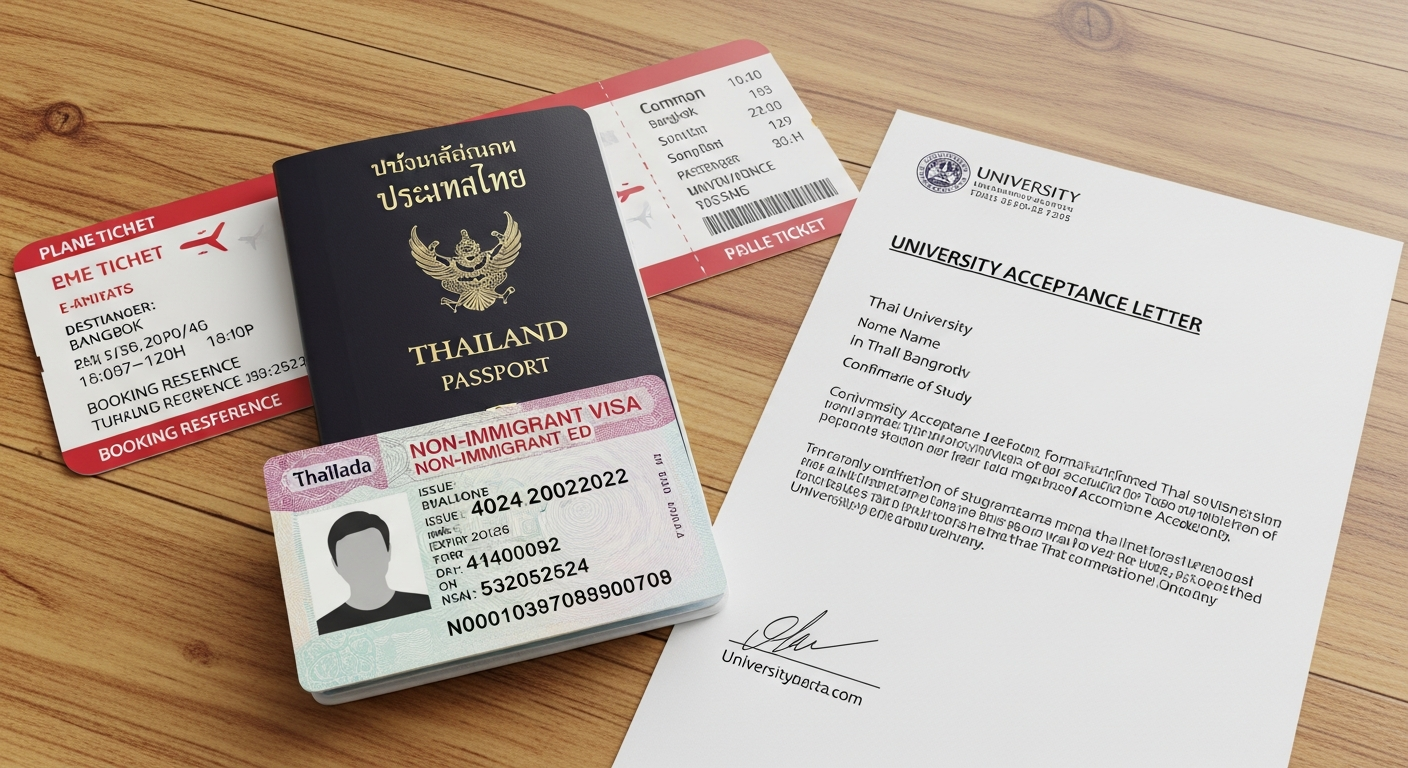
📱 Mandatory TDAC Requirement for Students
Before flying to Thailand to begin your studies, you must complete the Thailand Digital Arrival Card (TDAC) online. Submit your arrival details via tdac.immigration.go.th within 3 days prior to touching down.
What Qualifies for an ED Visa?
The scope of the Education Visa is impressively broad. However, the absolute non-negotiable rule is that the institution must be officially certified and registered with the Thai Ministry of Education (MoE) or the relevant government authority. Eligible study paths include:
🎓 University Degrees
Full-time enrollment in a Bachelor’s, Master’s, or Ph.D. program at accredited Thai public or private universities.
🏫 K-12 International Schools
Foreign children enrolled in certified international schools in Thailand receive ED visas, allowing a parent to obtain a Non-O "Guardian" visa.
🗣️ Thai Language Schools
One of the most popular routes. You must attend physical classes for a minimum number of hours per week (usually 4-8 hours) at an MoE-certified language institute.
🥊 Muay Thai Training Camps
Long-term martial arts training at specific gyms authorized by the Sports Authority of Thailand to issue visa paperwork.
🍳 Culinary & Specialty Skills
Intensive Thai cooking schools, massage therapy academies, or even certified PADI Divemaster courses (under specific vocational rules).
🧘 Buddhist & Cultural Studies
Foreigners undertaking formal religious studies, monkhood, or intensive meditation courses at recognized temples/institutes.
💼 International Internships (The "Work" Exception)
While the ED Visa strictly prohibits standard employment, the Thai government makes a specific provision for university students who require an internship in Thailand to complete their academic degree.
- Academic Requirement: The internship must be a mandatory, credit-bearing component of your ongoing degree program at a recognized foreign or domestic university.
- Strictly Unpaid: The internship must be entirely unpaid. Receiving a salary, wage, or substantial monetary stipend immediately classifies the activity as employment, which requires a Non-Immigrant B Visa and a formal Work Permit.
- Documentation: To secure this ED visa sub-type, you must provide a formal request letter from your university's dean or coordinator, alongside an official acceptance letter from the Thai host company outlining the detailed training program.
The Step-by-Step Application Process
Securing an ED visa involves a multi-step coordination between you, your school, the Ministry of Education, and Thai Immigration.
1
Enrollment & Payment
You must select a certified school, submit your passport copies, photos, and background history, and pay the required tuition fees upfront.
2
Ministry Approval Letter (3-4 Weeks)
The school compiles your dossier and sends it to the Thai Ministry of Education. The MoE reviews your application and issues an official "Letter of Approval" specifically authorizing you to study.
3
E-Visa Application
Once the school sends you the MoE letter, you apply for the Non-Immigrant ED Visa online through the Thai E-Visa system via your home country's embassy. (Note: In-country conversion from a Tourist Visa is sometimes possible but highly restrictive and requires at least 15 days remaining on your stamp).
4
Arrival & 90-Day Extensions
You enter Thailand and receive a 90-day stamp. For long courses (like a 1-year language program), you must visit immigration every 90 days with your school representative to extend the visa and prove attendance.
⚠️ Common ED Visa Mistakes & Misconceptions
Immigration has heavily cracked down on ED Visa abuse in recent years. It is critical to avoid these fatal misconceptions:
- "I can enroll in an online foreign university and get a Thai ED Visa."
False. The school must be physically located in Thailand and certified by the Thai government. Remote learning for foreign institutions does not qualify. - "I'll just pay a 'visa mill' school and never attend classes."
A dangerous gamble. Immigration frequently conducts random spot checks at schools. Furthermore, when you go to immigration for your 90-day extensions, officers will test your Thai language skills or demand attendance logs. If you fail, your visa is canceled on the spot. - "I can work part-time as an English tutor."
False. The ED Visa explicitly forbids all forms of employment. Working without a Non-B visa and work permit leads to arrest, deportation, and blacklisting. - "I can get an ED Visa for volunteering."
False. Volunteering at an NGO or charity requires a completely different visa (Non-Immigrant O) and a specialized volunteer work permit.
💡 Student ProTip
Never rely on third-party "visa agents" promising an ED visa without studying. Always contact the school directly, ask to see their Ministry of Education certification, and ensure they have a dedicated visa liaison officer on staff to assist you with your 90-day immigration runs.
Frequently Asked Questions
1. Can I work part-time on an ED Visa in Thailand?
No. The Non-Immigrant ED Visa strictly prohibits any form of employment, whether paid or unpaid. If you are caught working, your visa will be canceled immediately.
2. How long is the ED Visa valid for?
You initially receive a 90-day visa from the embassy. Once in Thailand, you must visit immigration every 90 days to extend your stay, usually up to a maximum of 1 year per course enrollment.
3. Do immigration officers really test your Thai language skills?
Yes. If you are extending an ED visa based on studying the Thai language, immigration officers will frequently conduct a brief interview in Thai to verify you are actually attending classes and learning.
4. Can I change schools while on an ED Visa?
Changing schools is highly bureaucratic. It generally requires a cancellation letter from your current school and a new approval letter from the Ministry of Education for the new school. In many cases, it is easier to leave the country and apply for a new visa.
5. What happens to my visa if I drop out or graduate?
Your ED Visa is tied directly to your enrollment. If you graduate, drop out, or stop attending classes, the school is legally required to notify immigration, and your visa will be canceled. You must leave the country shortly after.
Disclaimer: The information provided in this guide is intended for general informational and educational purposes only. Visa regulations, attendance requirements, and immigration policies in Thailand are highly dynamic and subject to frequent changes by the Thai government without prior notice. REMAX Thailand is a real estate agency and does not provide formal legal or immigration advice. For the most accurate, legally binding information regarding education visas, we strongly advise consulting with your certified educational institution, a qualified immigration lawyer, or visiting the official website of the Ministry of Foreign Affairs, Kingdom of Thailand.