How to Buy or Sell a Business in Thailand: The Definitive Market Guide
Navigating Thailand's business-for-sale market—a dynamic landscape valued to exceed USD 19 billion—presents immense opportunity for international investors and local entrepreneurs alike. However, the path to a successful transaction is fraught with complexities. Investors frequently face a fragmented marketplace characterized by decentralized listings, opaque legal structures such as leasehold restrictions versus freehold quotas, and a critical lack of reliable, consolidated market data. Without expert guidance, these hurdles can lead to decision paralysis or costly regulatory missteps.
REMAX Thailand provides the definitive end-to-end solution, transforming this complexity into a clear, secure path to acquisition or a profitable exit. Whether you are a foreign lifestyle investor seeking a boutique resort in Phuket, a corporate entity targeting industrial assets in the Eastern Economic Corridor (EEC), or a Thai business owner preparing to sell, we bridge the gap. We connect qualified buyers with vetted sellers, managing every step from confidential valuation and legal due diligence to the final post-sale transition. This guide serves as your roadmap to understanding the mechanics of buying and selling businesses in one of Southeast Asia's most robust economies.
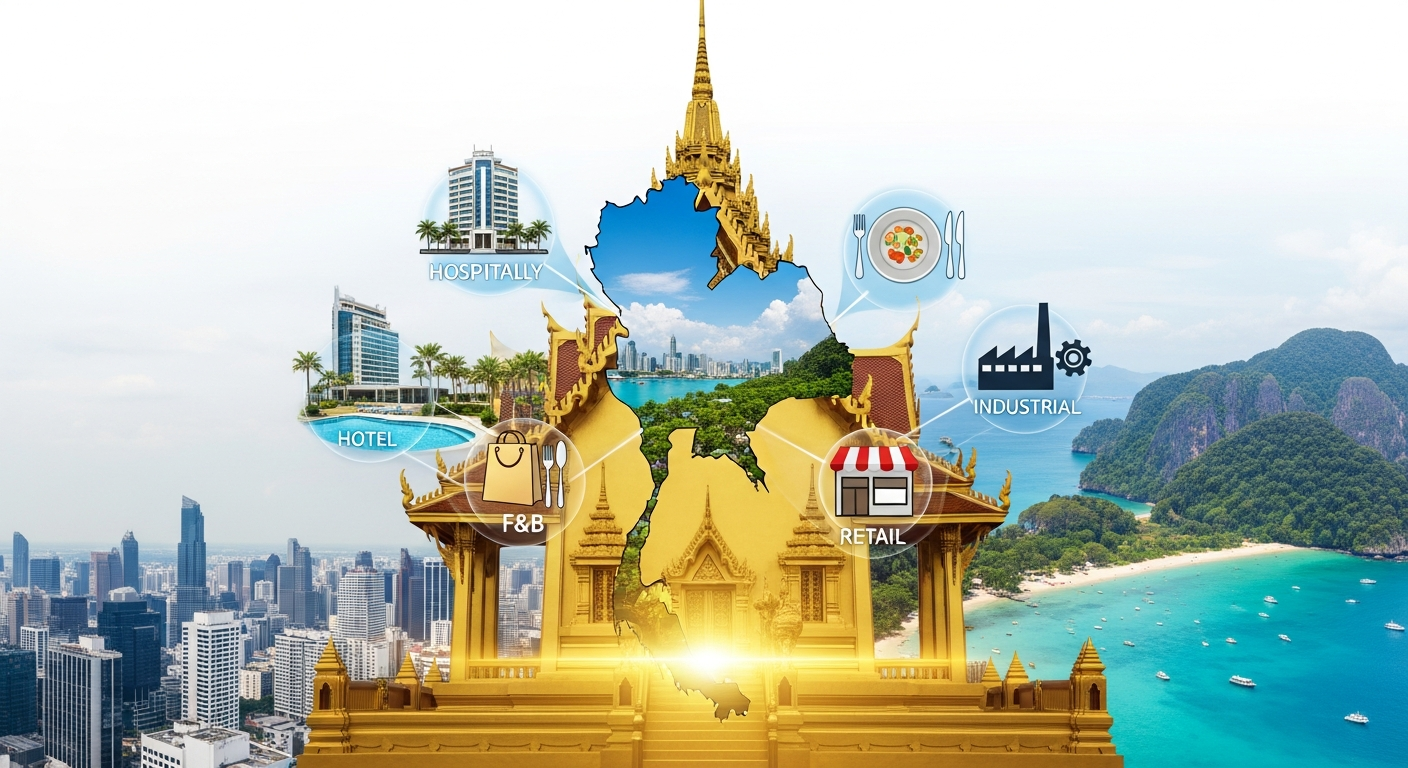
Thailand's commercial landscape is evolving rapidly, driven by strategic foreign investment and government incentives.
Why is Thailand a Prime Market for Business Acquisitions?
Thailand is a prime market for business acquisitions due to its projected 5.62% CAGR in commercial real estate, a 25% year-over-year increase in foreign buyer transactions, and strong government incentives driving growth in strategic sectors like industrial, logistics, and healthcare.
Robust Market Growth & Projections
The trajectory of Thailand's commercial business sector is not merely speculative; it is anchored in tangible economic data and infrastructure development. Market projections indicate that the commercial real estate and business transfer market will reach approximately USD 25.03 billion by 2031. This steady growth is fueled by a post-pandemic rebound in tourism, a surge in export-oriented manufacturing, and the rapid digitization of the economy.
In the capital, Bangkok continues to dominate with a 41.96% market share in commercial real estate. The demand for Grade A office space remains resilient, with occupancy rates stabilizing as multinational corporations return to physical hubs. For investors, this signals a maturing market where established businesses with physical assets retain significant value.
Rising Foreign Confidence
Foreign investor confidence is at a multi-year high, evidenced by a 25% year-over-year increase in transactions involving non-Thai buyers. Thailand's strategic position in the heart of ASEAN makes it an unavoidable gateway for companies looking to tap into the CLMV (Cambodia, Laos, Myanmar, Vietnam) sub-region. Whether it is lifestyle investors seeking "going concern" hospitality ventures in Phuket or institutional funds targeting logistics, the appetite for Thai assets is diversifying.
Government Support: The EEC and BOI
The Royal Thai Government acts as a catalyst for this activity through the Eastern Economic Corridor (EEC) development plan and the Board of Investment (BOI). The EEC is transforming provinces like Chonburi and Rayong into high-tech industrial hubs, supported by massive infrastructure spending on high-speed rail and deep-sea ports.
Simultaneously, the BOI offers a suite of incentives that are arguably the most attractive in the region for foreign buyers. These include corporate income tax holidays of up to 13 years, exemptions on import duties for machinery, and streamlined regulations for promoted "S-curve" industries such as robotics, medical hubs, and digital services. These mechanisms significantly de-risk the entry for foreign entities, allowing them to focus on profitability rather than regulatory hurdles.
The Step-by-Step Process for Buying or Selling a Business in Thailand
The process of buying or selling a business in Thailand involves eight critical stages: confidential enquiry and valuation, professional listing preparation and marketing, buyer sourcing and qualification, negotiation and term setting, coordinated due diligence, closing and legal transfer, and a structured post-sale transition plan.
Step 1: Confidential Valuation & Strategic Preparation
For sellers, the journey begins with discretion. In Thailand, rumor control is vital; premature news of a sale can unsettle staff and suppliers. We initiate every engagement with a strict Non-Disclosure Agreement (NDA). Our valuation specialists then conduct a deep dive into the business's financials, analyzing EBITDA, asset depreciation, and market positioning to establish a fair market value. We also advise on pre-sale improvements—such as organizing financial documentation or resolving minor operational issues—to maximize the asset's attractiveness.
Step 2: Professional Listing & Targeted Marketing
Once valuation is agreed upon, we create a comprehensive listing package. This includes an executive summary, detailed financial snapshots, and high-quality multimedia assets. REMAX employs a multi-channel marketing approach, leveraging our private buyer database, international investor networks, and targeted digital campaigns. This ensures that the business is exposed to qualified buyers—both local and international—without compromising confidentiality.

Step 4: Closing, Transfer & Post-Sale Transition
The final stage involves the logistical heavy lifting. We assist with escrow instructions, contract finalization, and the complex regulatory filings required by the Thai Department of Business Development (DBD) and the Land Department. Crucially, we emphasize a structured transition plan. This often involves the seller staying on for a defined period to train the new owner, facilitate introductions to key suppliers, and communicate the change to employees, preserving the business's goodwill and operational continuity.
Navigating Foreign Ownership: Leasehold, Freehold, and BOI Incentives Explained
Foreigners cannot directly own freehold land for most business types in Thailand; transactions are typically structured via long-term leaseholds (30 to 99 years). However, the Board of Investment (BOI) provides special incentives and ownership structures for promoted industries, making it a critical pathway for foreign investors.
The Reality of Leasehold vs. Freehold
A common misconception is that purchasing a business automatically grants ownership of the land it sits on. In Thailand, while a foreign entity can own the building structure and the business assets (brand, inventory, licenses), the underlying land is restricted. Consequently, most business sales involving real estate are structured as leasehold transfers.
Standard commercial leases are typically registered for 30 years at the Land Department, offering secure legal tenure. Options to renew for additional 30-year terms are standard contractual add-ons. It is important to note that the 49% foreign ownership quota—often cited in real estate—applies specifically to freehold condominium units and rarely to standalone commercial businesses like restaurants or factories, where leasehold is the norm.

Understanding the distinction between asset ownership and land leasehold is the key to secure investment in Thailand.
Unlocking Opportunity with BOI Incentives
For investors targeting larger scale or high-tech enterprises, the Board of Investment (BOI) offers a powerful exception to the general rules. The BOI is a government agency tasked with promoting valuable industries such as advanced manufacturing, biotechnology, data centers, and digital platforms.
A BOI-promoted company can be granted permission to own land for its operations, bypassing the standard foreign restriction. Furthermore, these companies can enjoy majority or even 100% foreign ownership of the business entity itself. However, securing BOI status requires a rigorous application process detailing the technology transfer and economic benefit to Thailand. This is where REMAX's network of legal experts becomes invaluable, guiding you through compliance to unlock these premium benefits.
High-Growth Sectors and Regions for Investment in Thailand
The most promising investment opportunities in Thailand are concentrated in specific sectors and regions. These include the industrial and logistics sectors in the Eastern Economic Corridor (EEC), the rebounding hospitality and F&B sectors in tourism hubs like Phuket and Chiang Mai, and the Grade A office and retail markets in Bangkok.
The Industrial East: EEC and Manufacturing
The Eastern Economic Corridor (EEC), covering Chonburi, Rayong, and Chachoengsao, acts as the nation's industrial powerhouse. Vacancy rates for factories in these zones remain exceptionally low at approximately 9.53%, reflecting high demand. Investors here focus on logistics warehouses, cold chain storage, and manufacturing facilities driven by the auto-parts and electronics supply chains. With BOI incentives frequently applicable, this region offers high-yield potential for institutional buyers.
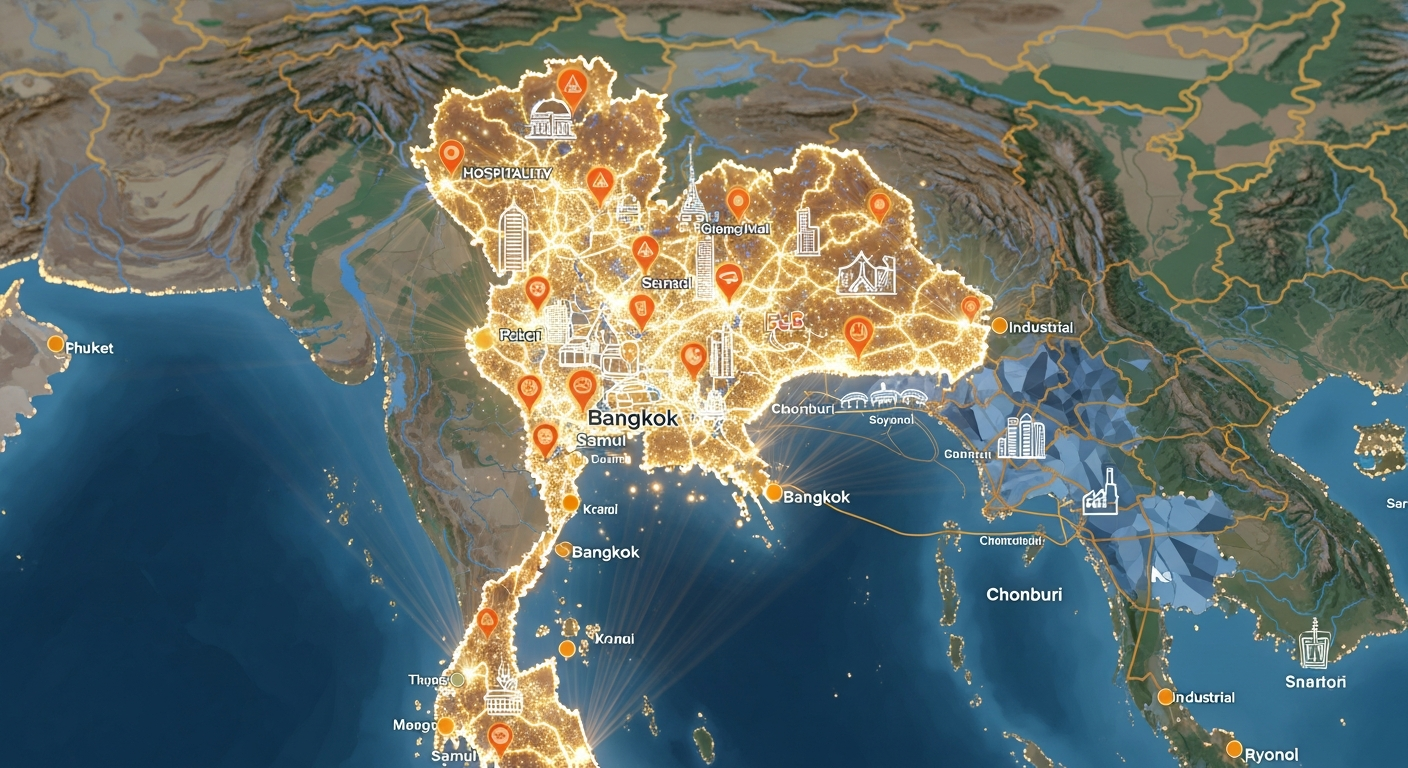
The Tourism South & North: Phuket and Chiang Mai

Phuket continues to lead the tourism rebound, where "going concern" sales of boutique resorts, luxury villas, and established restaurants are in high demand. These assets often come with existing hotel licenses—a valuable commodity that saves years of bureaucratic effort. In the north, Chiang Mai attracts lifestyle investors focusing on boutique tourism, cafes, and wellness retreats, catering to the digital nomad and retiree demographic.
The Capital Hub: Bangkok
Bangkok remains the undisputed center for corporate and retail investment. With a 38.22% share of the office market, opportunities abound in acquiring service-based businesses, retail franchises, and education centers. The city's density ensures a consistent customer base, making it ideal for businesses that rely on foot traffic and urban connectivity.
Frequently Asked Questions
Q: What is the difference between a 'going concern' and an asset sale in Thailand?
A: A 'going concern' is a fully operational business sold with all assets, inventory, goodwill, and existing contracts/leases intact. An asset sale involves only the purchase of specific assets (e.g., equipment, property) without the operational entity. The 'going concern' model is common for hospitality and retail to ensure business continuity.
Q: Can a foreigner own 100% of a business property in Thailand?
A: Generally, no. Foreigners cannot own freehold land. Businesses are tied to long-term leasehold properties. The primary exception is through a Board of Investment (BOI) promoted company, which may be granted rights to own land for its industrial or commercial purposes.
Q: What are the typical transfer fees when buying a business in Thailand?
A: When the sale involves property, the Thai Land Department charges a transfer fee, typically 2% of the property's appraised value. This fee is customarily paid by the buyer for transactions over THB 1 million, but terms can be negotiated.
Q: How does the Eastern Economic Corridor (EEC) benefit business investors?
A: The EEC offers significant benefits through the BOI, including corporate income tax exemptions for up to 13 years, deductions on transport and utility costs, and streamlined permits for foreign investors in targeted high-tech and logistics industries.
Q: Is a business broker mandatory for a sale in Thailand?
A: While not legally mandatory, using a professional broker like REMAX is essential for mitigating risk. We handle critical due diligence on licenses, verify financial statements, navigate the complex Land Department transfer process, and ensure compliance with BOI regulations, preventing costly errors.
The REMAX Pro Tip
Before committing to expensive legal due diligence, a savvy buyer in Thailand must first verify two critical items: the legitimacy of the seller’s business licenses and the exact terms remaining on any property lease. Many deals collapse late in the process because a license is non-transferable or a lease has an unfavorable renewal clause. A preliminary check by your REMAX advisor can save you tens of thousands of baht and months of wasted time.
R
REMAX Thailand Editorial Team
Our team of market analysts and business advisors provides data-driven insights into the Thai commercial landscape. With decades of local experience and affiliation with the Thai Land Department standards, we ensure every piece of advice is accurate, actionable, and legally sound. We are committed to client confidentiality and transaction success.
Ready to Make Your Move?
Mitigate risk and maximize ROI in Thailand's complex but lucrative USD 19B+ business market with REMAX's expert, data-driven, end-to-end guidance.